A uniform has to do more than look good on the first day. It has to handle long shifts, repeated washing, heat, movement, and the daily demands of the job. For organizations evaluating sustainable uniform materials, the right choice is not simply the fabric with the greenest label. It is the material that gives your team reliable comfort and appearance while reducing unnecessary waste over the life of the garment.
For businesses, schools, healthcare offices, restaurants, municipalities, and service teams across Southwest Florida, that distinction matters. A shirt that fades, stretches out, or wears through quickly must be replaced sooner. A durable uniform that employees are comfortable wearing can support a more responsible apparel program, even when its sustainability claims are less flashy.
What Makes Uniform Materials Sustainable?
Sustainability in uniforms comes from several decisions working together: how fibers are produced, how much material is used, how long the garment lasts, and what happens when it is no longer needed. No single fabric is the right answer for every workplace.
Recycled polyester, for example, gives post-consumer plastic a second use and is commonly available in polos, performance shirts, outerwear, and workwear. It resists wrinkles, holds color well, and performs reliably for active teams. That makes it a practical option for hospitality staff, coaches, field crews, and organizations that need moisture-management features.
Organic cotton is grown with standards that restrict certain synthetic pesticides and fertilizers. It offers the familiar softness and breathability many employees prefer, particularly in casual corporate apparel, retail uniforms, and school spirit wear. However, cotton can require more water than synthetic alternatives and may not dry as quickly during a humid Florida workday.
Blended fabrics often provide the best operational balance. A recycled polyester and cotton blend can improve durability and reduce shrinkage while retaining a softer hand than a fully synthetic garment. The trade-off is that blended garments can be harder to recycle at the end of their useful life. For most uniform programs, though, extending wear life is often more valuable than choosing a material that sounds ideal on paper but does not perform in the field.
Sustainable Uniform Materials by Job Requirement
The best material starts with the work, not the trend. Before selecting a uniform style, consider how employees move, whether they work indoors or outdoors, how frequently garments are washed, and which safety or dress-code requirements apply.
Healthcare and medical offices
Medical uniforms need to support comfort, mobility, and a consistently clean presentation. For scrubs, durable performance blends can be a strong choice because they hold up to frequent laundering and resist wrinkling during long shifts. When sustainable options are available in the preferred style and color, recycled-content performance fabrics can help reduce reliance on virgin materials without compromising practical needs.
A practice should also think about standardization. Selecting a dependable scrub line that staff can reorder over time prevents the mismatched appearance that occurs when a preferred style is discontinued or difficult to replace.
Restaurants, hotels, and hospitality teams
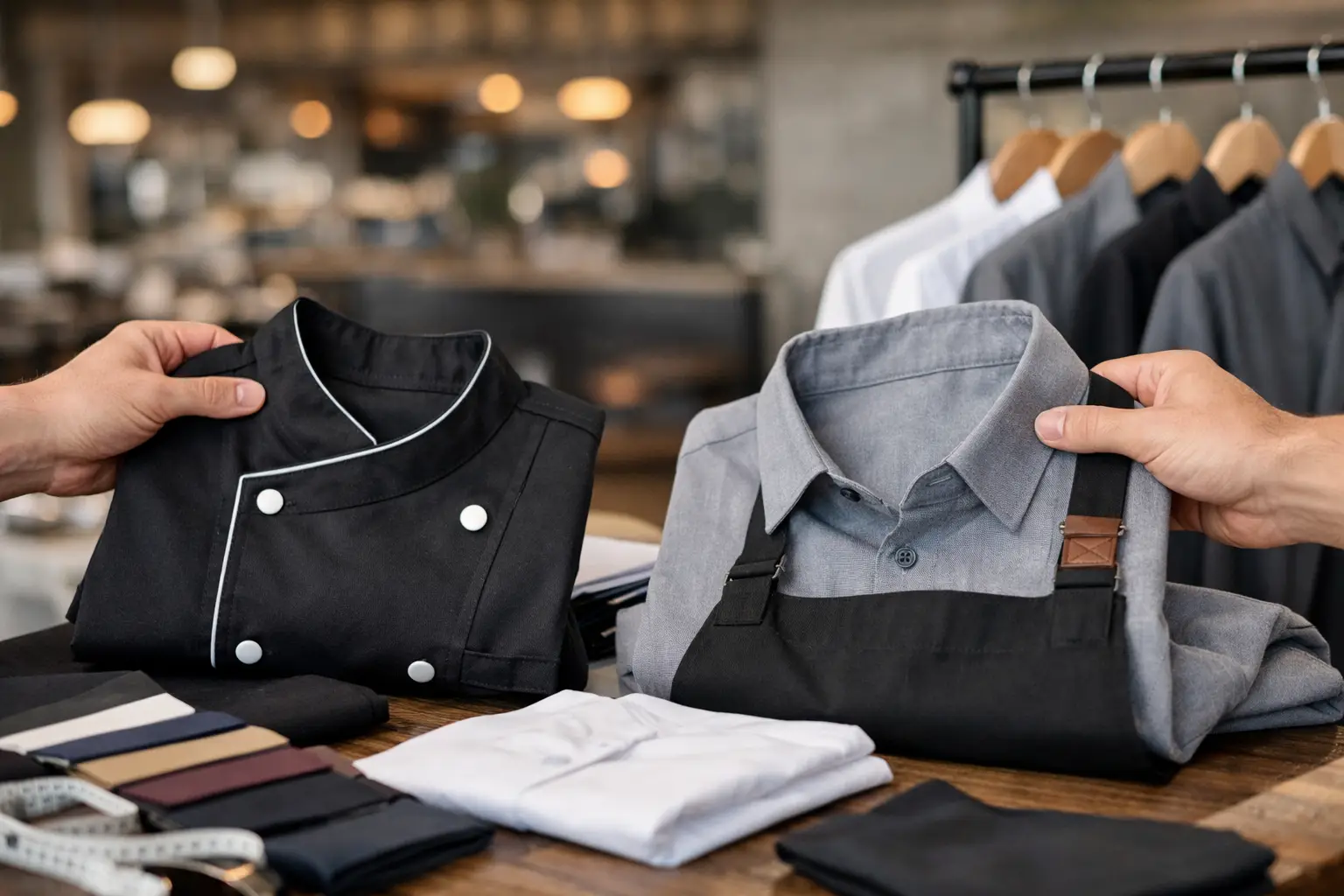
Hospitality uniforms are highly visible. Servers, front-desk associates, housekeeping teams, and kitchen staff need apparel that supports the brand while standing up to spills, repeated washing, and active shifts. Recycled polyester polos, woven shirts, aprons, and lightweight layers can be effective choices because they maintain their shape and color.
For outdoor-facing roles in Naples and throughout Southwest Florida, breathability matters. A heavier fabric may last longer in theory, but if employees find it too hot to wear comfortably, it is not the right investment. Lightweight performance fabrics with recycled content can offer a better fit for the climate.
Construction, landscaping, and service crews
Workwear must prioritize job safety and durability. For crews exposed to sun, dirt, tools, or rough surfaces, a tougher fabric with reinforced construction may be the more sustainable decision because it reduces replacement frequency. Look for work shirts, high-visibility apparel, and outerwear built for commercial use rather than choosing lighter promotional garments that will wear out quickly.
This is also where decoration matters. A well-produced embroidered logo or properly applied transfer should withstand regular wear without cracking, peeling, or distorting the garment. The uniform and its decoration should be planned as one system.
Office, retail, and school teams
Polos, button-downs, cardigans, quarter-zips, and branded tees give these teams more flexibility. Organic cotton or recycled-content blends may be appropriate when comfort and a polished appearance are the priorities. A small collection of coordinated styles can also be more sustainable than forcing every employee into one garment that does not suit their role or fit preference.
Offering approved options in the same brand colors helps employees feel comfortable while keeping the organization’s presentation consistent. It also makes reordering easier as teams grow or seasonal staff come on board.
Durability Is Part of the Sustainability Decision
The most overlooked part of sustainable uniforms is service life. A lower-impact fiber is worthwhile, but only if the finished garment can perform for the intended job. Thin fabric, weak seams, poor color retention, and low-quality decoration create a cycle of early replacement that increases cost and waste.
When comparing options, ask practical questions. How will the garment look after 25 or 50 washes? Does it resist pilling? Will dark colors fade? Is the fabric stable enough for embroidery? Can the supplier provide the same item for future hires? These answers are often more useful than a broad sustainability claim.
Fit is another factor. Uniforms that fit well are worn more often and cared for better. Whenever possible, provide a size range that accommodates the full team and choose styles designed for the level of movement employees need. A garment sitting unused in a closet is not a sustainable purchase.
Decoration Choices Matter Too
A sustainable garment can lose its value if the decoration method is poorly matched to the fabric or the intended use. Embroidery is durable and professional for polos, woven shirts, jackets, hats, and bags. It is a strong fit for organizations that want a long-lasting logo presentation, although very lightweight garments may need a different approach to avoid puckering.
Screen printing works well for larger graphics, team shirts, event apparel, and cotton-rich garments. For some performance fabrics or short-run needs, heat-applied decoration may be the right choice. The key is selecting a method that looks clean, remains durable, and fits the garment’s construction.
Working with an experienced local uniform partner helps avoid preventable mistakes, such as using a heavy embroidered design on a thin performance polo or selecting ink that does not hold up on the chosen fabric. At Sew Shore, uniform selection and in-house decoration can be planned together, helping organizations create a finished program rather than a collection of disconnected items.
Build a Uniform Program That Reduces Waste
Material selection is only one part of responsible purchasing. A better ordering process can reduce excess inventory, rushed substitutions, and boxes of unused apparel.
Start with a clear uniform standard that identifies approved styles, colors, logo placement, and decoration details. Keep a record of the products selected so additions and replacements match the original order. If your organization has multiple departments, create role-specific options rather than ordering one item for everyone.
Order quantities should reflect realistic staffing needs. It is sensible to keep a limited supply for new hires, but ordering too far ahead can lead to obsolete garments after a logo update, staff change, or uniform policy revision. For recurring programs, regular smaller orders may be more efficient than a large annual purchase.
When uniforms are retired, consider whether clean, logo-free items can be donated, repurposed for non-customer-facing tasks, or collected through a textile-recycling program. Branded garments that cannot be reused externally may still have value for training, maintenance, or internal events.
Questions to Ask Before You Order
A sustainable uniform decision should be specific to your organization. Ask whether the material is appropriate for the work environment, whether it will withstand the required laundering, and whether the style will remain available for reorders. Confirm how the logo will be applied and request guidance on any limitations tied to fabric weight, stretch, or garment color.
It is also worth asking what employees actually prefer. A small wear test with key team members can reveal comfort, fit, and performance issues before a larger order is placed. That simple step can prevent an expensive uniform rollout from becoming a storage problem.
The strongest uniform programs are built around practical use, reliable quality, and a look employees are proud to wear. Choose materials that can keep up with your team, then support them with thoughtful decoration, consistent reordering, and care that extends the life of every garment.