A uniform program can look great in a presentation and still fail at 6:30 p.m. on a packed Friday night. This restaurant uniform rollout case study follows a representative Southwest Florida full-service restaurant preparing for a seasonal refresh, a new menu direction, and a larger front-of-house team. The goal was not simply to put a logo on shirts. It was to create a consistent, practical uniform system that staff would actually wear comfortably and managers could reorder without confusion.
The restaurant had a familiar challenge: its team looked uneven. Servers wore different black shirts, bartenders had no clear distinction, and hosts often looked too casual for the first impression they were expected to create. The ownership group wanted a more polished guest experience without choosing apparel that felt stiff, costly, or impractical in Florida heat.
The Starting Point: A Brand Standard Without a Uniform System
The restaurant had a recognizable logo, a coastal-inspired interior, and a loyal local customer base. What it lacked was a clear employee apparel standard. Previous orders had been placed as needs came up, often through different suppliers and with little attention to garment consistency. Colors varied slightly. Logo placement changed. New hires received whatever sizes happened to be available.
That approach created small operational problems that added up. Managers spent time chasing replacement shirts. Employees did not always know what was approved for a shift. The team’s appearance varied by department, even when the dining room was full of guests.
The restaurant’s leadership set three practical requirements for the rollout. The uniforms needed to reflect an elevated but approachable dining experience, hold up through frequent laundering, and be easy to replenish as seasonal staffing changed. Those requirements guided every decision that followed.
Restaurant Uniform Rollout Case Study: The Plan
Before selecting garments, the project began with the people who would wear them. A successful restaurant uniform program has to account for job function, movement, temperature, and cleaning demands. A host greeting guests near the entrance does not need the same garment features as a line cook working near heat and steam.
The team was divided into four groups: hosts, servers, bartenders, and kitchen staff. Instead of creating four completely unrelated looks, the program used a shared color family and a consistent logo treatment. This gave the restaurant a unified appearance while allowing each department to have apparel suited to its role.
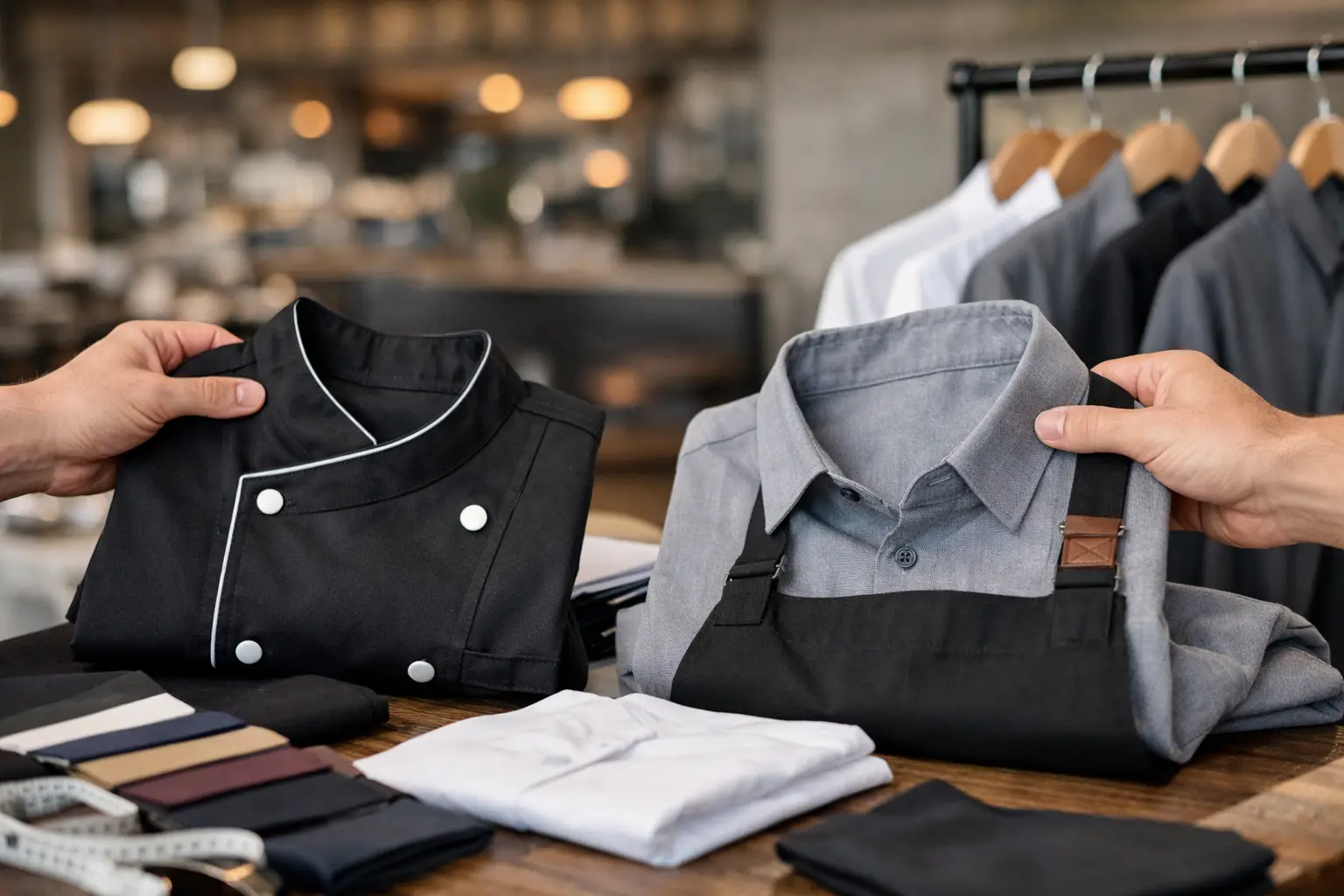
Hosts received polished branded tops paired with a defined pant color. Servers wore lightweight, easy-care performance shirts with a small embroidered logo. Bartenders used a darker shirt option with a clean, visible name presentation, while kitchen staff received durable work shirts and aprons selected for frequent washing and active movement.
This is where a common trade-off came into focus. Embroidery offers a refined, durable finish, especially for front-of-house shirts, but it may not be the right decoration method for every garment or every budget. Screen printing can be a practical choice for larger staff orders or back-of-house apparel. The right approach depends on the fabric, logo detail, expected wash frequency, and the restaurant’s desired presentation.
Keeping the Logo Consistent
The restaurant had used several versions of its logo over time. Some had thin details that would not reproduce clearly at a small embroidered size. Rather than forcing the full artwork onto every garment, the design was adjusted for apparel use.
A simplified logo treatment was selected for the left chest. The thread colors were matched to the restaurant’s established palette, with enough contrast to remain readable on the chosen shirt colors. This step prevented a frequent problem in branded apparel: a logo that is technically present but difficult to recognize from a few feet away.
A proofing process gave the manager a chance to review placement, scale, and thread color before full production. That approval step matters. A small adjustment before production is simple. Correcting a full order after decoration is not.
Sizing Was Treated as an Operations Issue
Sizing is one of the easiest details to underestimate. Restaurant teams often include employees with different fit preferences, and a unisex size range does not always produce the most comfortable or professional result. A shirt that is too tight limits movement. One that is too oversized can look untidy and create safety concerns near food preparation equipment.
For this rollout, staff members reviewed physical samples and completed a sizing form before the order was finalized. Managers also ordered a small number of extra pieces in the most common sizes for onboarding and replacements.
That small inventory decision reduced future pressure. A new server could receive an approved uniform on the first day rather than wearing an off-brand substitute while waiting for an individual order. For seasonal restaurants, this is especially useful before the busiest months begin.
What Happened During the First Weeks
The initial rollout was scheduled around the restaurant’s service calendar. Uniforms were distributed before a staff meeting, giving managers time to explain the new appearance standards and how employees could request additional pieces. Staff were told what was required, what was optional, and which garments were reserved for specific roles.
The response was strongest where comfort had been considered early. Servers appreciated lighter fabrics during long shifts, and bartenders liked having a uniform that looked intentional without feeling overly formal. The restaurant also found that a consistent uniform helped newer employees feel part of the team sooner.
There were adjustments. The original apron selection looked right but proved less practical for staff who moved constantly between tables, the bar, and service stations. The restaurant changed to a more functional apron style for the next order. This is a good reminder that a uniform program should be evaluated in real service conditions, not only in a fitting area.
Managers also learned that not every position needed the same quantity of garments. Full-time servers needed more shirts in rotation than hosts who worked fewer shifts. Kitchen apparel required more frequent replacement because of staining and higher wash demands. Ordering the same amount for every person would have tied up budget in the wrong places.
The Reorder System Made the Difference
The most useful outcome was not the first order. It was the restaurant’s ability to maintain the program afterward.
A clear reorder plan was created with approved garment styles, colors, decoration details, and department assignments. When a manager needed uniforms for two new hires, there was no need to restart the selection process. The approved items and logo specifications were already established.
This protects brand consistency over time. Restaurants often lose uniform control when a replacement garment is chosen because it is available quickly, even if it has a different shade, fabric, or logo treatment. A documented program makes it easier to make quick decisions without lowering the standard.
At Sew Shore, this type of ongoing support is part of the value of working with a local uniform and decoration partner. The project is not limited to the day the first boxes are delivered. Restaurants need help managing staff turnover, seasonal hiring, logo updates, and changing garment availability.
Lessons for Restaurant Owners and Managers
This case study shows that a restaurant uniform rollout works best when it is treated as an operational project rather than a one-time apparel purchase. The garments should support the brand, but they also need to support the pace of service.
Start with departments and job duties before choosing styles. Confirm that the logo is built for the decoration method and garment color. Give employees a chance to check fit before the full order. Most importantly, plan for reorders from the beginning. A uniform system only stays polished when replacements are easy to obtain and match what the team already wears.
Cost matters, and every restaurant has a budget. Lower-priced garments may make sense for short-term events, promotions, or high-turnover roles. For customer-facing positions and daily wear, investing in better fabric, consistent decoration, and a managed reorder process often reduces frustration later.
A well-run rollout does more than make employees look coordinated. It gives guests a clearer sense of who is there to help, gives managers fewer details to chase, and gives the restaurant a visual standard that holds up shift after shift. The best program is one your team can wear with confidence and your operation can maintain without starting over each time someone new joins the staff.