A customer forms an opinion before the first conversation is finished. At the front desk, on a job site, in a dining room, or during a community event, corporate apparel gives your team a shared, professional presence. The right program does more than place a logo on a shirt. It helps employees feel prepared, makes roles easier to recognize, and gives customers a visible reason to trust the people representing your business.
For organizations in Southwest Florida, that decision also has to work in real conditions. Heat, humidity, movement, frequent washing, and seasonal staffing all affect what employees will actually wear. A polished look only works when the garments are comfortable, durable, and easy to reorder.
Start With the Work, Not the Logo
The most effective apparel programs begin with how employees spend their day. An office team may need wrinkle-resistant polos, woven shirts, or lightweight layers for customer meetings and cool indoor spaces. A restaurant team needs garments that hold up to spills, movement, and repeated laundering. Healthcare offices often need scrubs, jackets, and identification that support both a professional appearance and practical care delivery.
The same principle applies to field service, construction, schools, government departments, and event teams. A shirt that looks sharp in a catalog may not be right for staff working outdoors or lifting equipment. Before choosing colors or decoration, consider the environment, physical demands, safety requirements, and expected wash frequency.
Ask a simple question: will employees be glad to put this on for a full shift? If the answer is no, even a well-designed uniform program will lose consistency over time.
How to Choose Corporate Apparel for Your Team
A strong selection balances brand standards with employee needs. Price matters, but the lowest initial cost is not always the best value if garments fade quickly, shrink, or become unavailable when it is time to reorder. A dependable program uses styles that can remain part of the team wardrobe instead of changing with every season.
Start by narrowing the choices to garments that fit the role. Then evaluate fabric, fit range, color availability, and decoration method together. A dark polo with a detailed logo, for example, may call for embroidery with thread colors chosen for clear contrast. A large event graphic may be better suited for screen printing. The best method depends on the artwork, the garment, the order quantity, and the finish you want.
For many organizations, a practical starter assortment includes:
- Branded polos or button-downs for customer-facing staff
- T-shirts or performance shirts for active, outdoor, or event-based teams
- Layering pieces such as quarter-zips, jackets, or vests
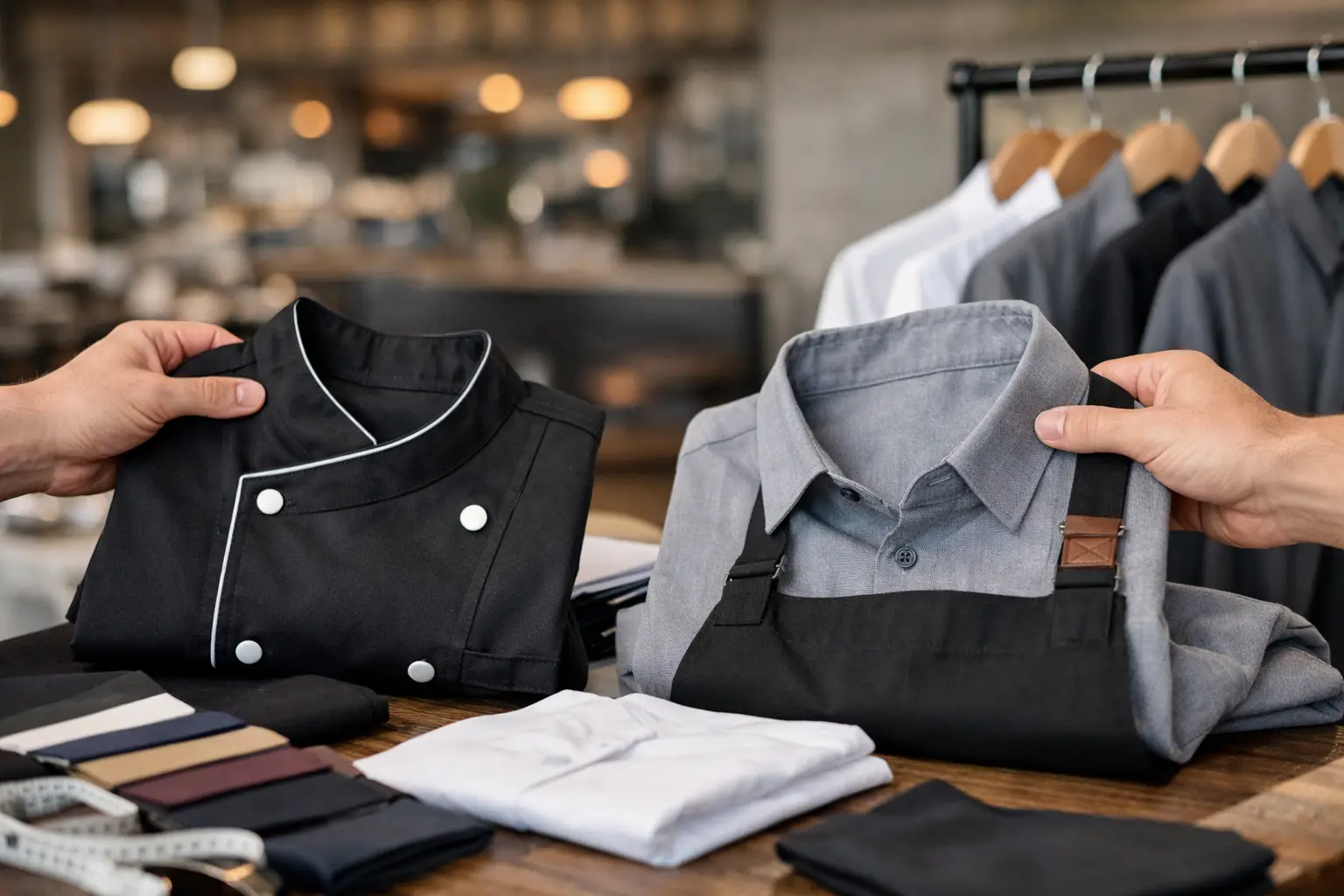
- Role-specific items including scrubs, work shirts, aprons, hats, or safety apparel
This does not mean every employee needs every item. A thoughtful program can create clear distinctions between office personnel, managers, technicians, and support staff while maintaining one recognizable brand image.
Prioritize Fit and Size Availability
Fit is often the difference between apparel that gets worn and apparel that stays in a drawer. Teams are made up of different body types, and a one-style approach can leave employees uncomfortable or frustrated. Whenever possible, select coordinated men’s, women’s, and extended-size options rather than treating one cut as the default for everyone.
Samples can prevent expensive surprises. They allow decision-makers to check fabric weight, sizing, color, and logo placement before placing a larger order. This is especially valuable when introducing a new uniform standard or ordering for a group that has not worn branded apparel before.
Select Fabrics for Florida Conditions
Southwest Florida workplaces call for fabrics that perform in warm weather. Moisture-wicking performance materials can be a smart choice for outdoor crews, coaches, event staff, and employees moving between locations. Cotton-rich garments may offer familiar comfort for casual settings, while cotton-poly blends often provide a balance of softness, durability, and easier care.
There is no single best fabric. Performance fabric can be excellent for heat and activity, but some employees may prefer the feel of a traditional polo. Woven shirts can elevate a front-office look, yet they may require more maintenance than knit options. Match the material to the role, then give staff enough direction to care for the garment correctly.
Make Your Brand Easy to Recognize
A logo should be visible, legible, and appropriately sized. That sounds straightforward, but decoration choices can change the final result. Fine lines, small lettering, color gradients, and low-contrast artwork may need adjustment before they translate cleanly to thread or ink.
Embroidery offers a polished, long-lasting finish for polos, woven shirts, outerwear, hats, bags, and many uniforms. It is often a strong choice for smaller left-chest logos, names, and department identification. Screen printing is well suited to larger graphics, bold artwork, and team or event shirts. Patches, monograms, and specialty applications can add another level of distinction when they serve a clear purpose.
Consistency matters more than putting the logo everywhere. Choose a standard location, approved logo version, and brand color approach for each garment category. If managers wear embroidered outerwear while staff wear screen-printed tees, those choices can still feel connected when the artwork and colors are coordinated.
Build a Program That Is Easy to Reorder
The first order is only the beginning. New hires arrive, staff sizes change, departments expand, and seasonal teams return. Corporate apparel works best when it is planned as an ongoing program rather than a one-time purchase.
Keep a record of approved garments, decoration locations, thread or ink colors, and artwork versions. This makes repeat orders faster and helps protect your brand from small inconsistencies. It also gives purchasing teams a clearer way to manage budgets and avoid starting the selection process from scratch every time someone needs a new shirt.
A local partner can be particularly helpful when you need to see products in person, confirm a logo setup, handle varied sizing, or coordinate several items in one order. At United Uniforms / Sew Shore, organizations can combine uniform selection, embroidery, screen printing, patches, graphic support, and promotional products through one experienced Naples team. That kind of coordination reduces handoffs and keeps the finished program aligned.
Plan for Departments and Seasonal Needs
Not every team needs the same apparel year-round. A hospitality business may need lighter garments for summer and branded layers during cooler months. A school may need spirit wear for families alongside staff uniforms. A medical practice might order scrubs regularly while reserving embroidered jackets for front-office personnel and providers.
Planning these needs in advance helps avoid rushed decisions. It can also make it easier to group orders by department, establish approved choices, and maintain a professional appearance even when staffing changes quickly.
Avoid the Most Common Apparel Mistakes
The biggest mistake is choosing garments based only on appearance. A beautiful shirt that is too warm, too sheer, difficult to wash, or unavailable in needed sizes will not support your team. Another common issue is using artwork that was designed for a website or business card without adapting it for apparel decoration.
Ordering too little is also costly. It is wise to account for a modest number of new hires, replacement pieces, and popular sizes when placing an initial order. At the same time, avoid filling storage with styles that may be discontinued or with garments employees have not had a chance to try.
Finally, do not overlook the employee experience. Clear expectations about what is required, what is optional, and how to request replacements help make the program easier to manage. A uniform policy does not need to be complicated. It simply needs to give staff a consistent standard they can follow confidently.
Questions to Settle Before Ordering
Before approving artwork and quantities, confirm who will wear the apparel, where it will be worn, and how often it will be washed. Decide whether the order is for a single event, a new employee rollout, or a long-term uniform program. Clarify whether names, titles, departments, or individual sizing are needed.
It is also useful to establish who approves future orders. When one person or department maintains the approved garment list and logo standards, your organization avoids mismatched colors, outdated artwork, and inconsistent decoration from one order to the next.
Your employees are already representing your organization every time they greet a customer, answer a question, or step onto a job site. Give them apparel that feels as dependable as the work they do.