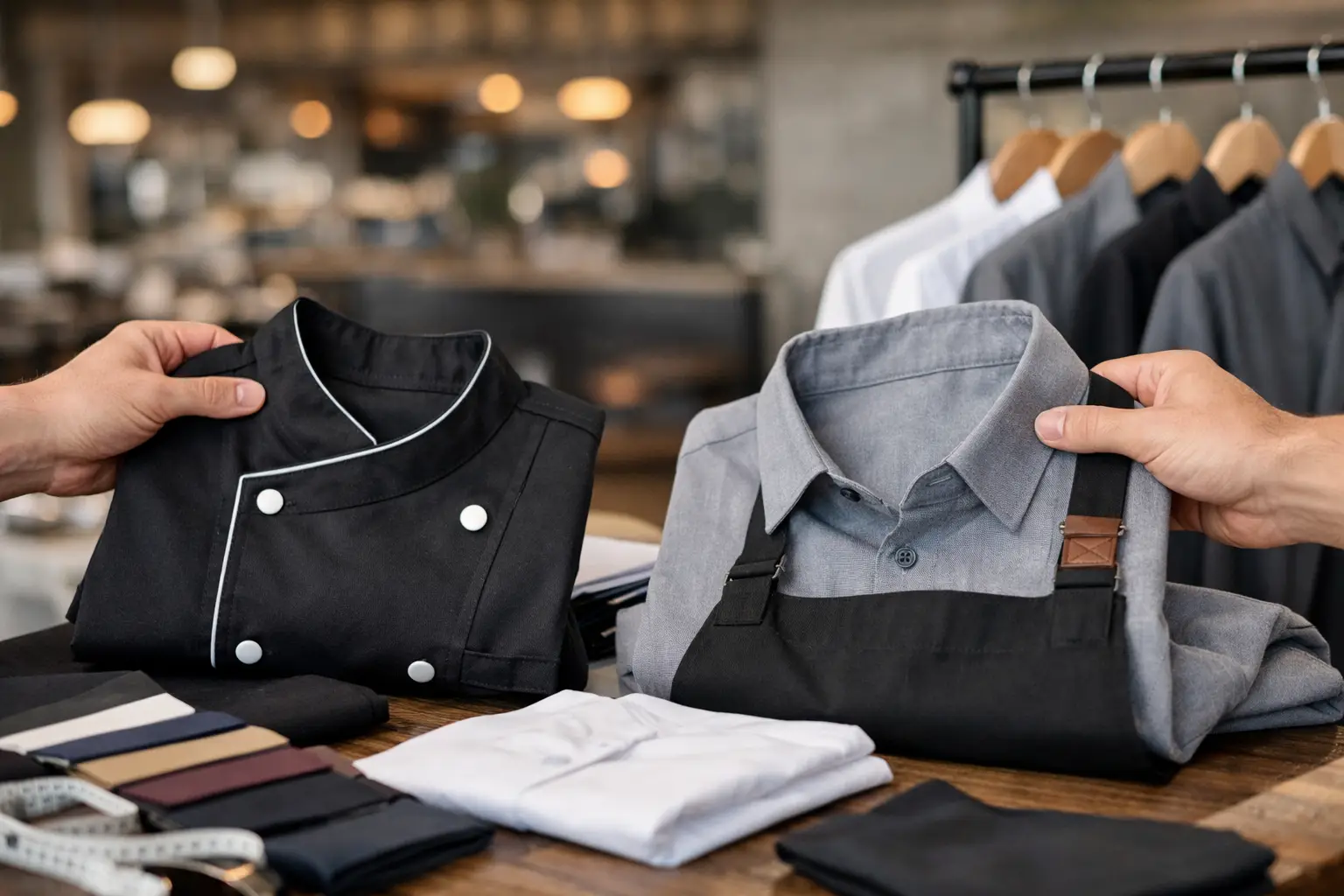
A busy dinner service will expose every weak point in a uniform program. Shirts wrinkle too fast, aprons stain permanently, sizes run short, and a missed reorder leaves new hires piecing together mismatched looks. That is why choosing the right restaurant staff uniform supplier is less about buying garments and more about protecting daily operations, brand presentation, and team confidence.
For restaurant owners and managers, uniforms sit at the intersection of image and function. Guests notice polished front-of-house attire right away, but staff members are the ones who feel the difference between clothing that works and clothing that gets in the way. A supplier should understand both sides of that equation. If they only talk about catalogs and pricing, they are missing the real job.
What a restaurant staff uniform supplier should actually provide
A reliable supplier does more than sell chef coats, polos, aprons, and button-downs. They should help you build a practical uniform program that matches your service style, budget, and brand identity. That includes guiding garment selection, decorating pieces with logos or names, keeping sizing organized, and supporting reorders when staffing changes.
For a quick-service restaurant, that may mean durable, easy-care polos and branded caps that hold up through frequent washing. For a fine dining concept, it may mean a more elevated presentation with pressed dress shirts, vests, aprons, and embroidered details. Neither approach is automatically better. It depends on your environment, your labor model, and how much maintenance you can realistically support.
The best suppliers ask operational questions early. How often will uniforms be washed? Are kitchen and front-of-house roles different? Do hosts need a more formal look than servers? Will seasonal hiring require frequent restocking? Those questions matter because they affect fabric choice, decoration method, and how well the program holds together over time.
Start with the reality of restaurant operations
Restaurant uniforms take a beating. Heat, grease, spills, bleach exposure, repeated laundering, and long shifts all shorten garment life. A good restaurant staff uniform supplier should be honest about that. Not every item that looks sharp on a sample rack will perform well in a kitchen or on a patio in Southwest Florida.
Breathability matters in warm climates. Stretch matters for active roles. Stain resistance matters in both casual and upscale service. And replacement planning matters more than many operators expect. If a supplier cannot help you standardize styles that will still be available for reorders, you may end up rebuilding the whole program sooner than planned.
That is one place where experience counts. A supplier that has worked with local businesses over time usually has a better feel for what holds up, what gets discontinued often, and what price points make sense for a growing team.
Uniforms should support the brand, not compete with it
A restaurant uniform should reinforce your concept the same way signage, menus, and interiors do. Clean embroidered logos, coordinated color choices, and consistent presentation tell guests your business pays attention to details. At the same time, uniforms should not become so complicated that they are expensive to replace or difficult for staff to wear correctly.
There is always a trade-off between style and simplicity. A more customized look can create a stronger first impression, but it may require longer lead times and tighter inventory control. A simpler setup is easier to reorder and onboard with, but it may not stand out as much. A dependable supplier helps you weigh those trade-offs instead of pushing a one-size-fits-all answer.
Decoration methods matter more than most buyers think
When restaurant managers compare suppliers, they often focus first on garment options. That makes sense, but decoration quality is just as important. An embroidered logo on a host stand shirt sends a different message than a peeling print on a server polo.
Embroidery is a strong choice for many restaurant applications because it delivers a polished, durable finish on polos, button-downs, aprons, and outerwear. Screen printing can work well for promotional shirts, back-of-house staff tees, or event-driven apparel where bold graphics and volume pricing make more sense. In some cases, a mixed program is the smartest move, with embroidery for guest-facing roles and print for casual or high-turnover use.
A capable supplier should explain those options clearly. They should also manage setup details such as logo placement, thread color matching, name personalization, and artwork preparation without turning the process into guesswork for your team.
Fit, sizing, and reorder support are where programs often succeed or fail
The first order gets most of the attention, but reorders are where a supplier proves their value. Restaurants add staff, replace worn pieces, promote team members, and adjust roles constantly. If it is difficult to reorder the same garments, the uniform program starts breaking down almost immediately.
That is why sizing support matters. A strong supplier should help you avoid common issues like over-ordering one size, under-ordering another, or choosing a cut that works for management but not line staff. They should also help maintain consistency across men’s, women’s, and unisex options where needed.
It is also worth asking how they handle brand continuity. If an item is discontinued, do they offer a close replacement and help preserve the look? If you need a rush order for a new opening or seasonal staffing increase, can they respond? These are operational questions, not minor details.
Local service can make a real difference
For many businesses, working with a local or regional uniform partner offers practical advantages. You are more likely to get direct communication, faster problem solving, and a supplier who understands the climate, labor patterns, and service expectations of your market. That becomes especially valuable when you need help fast, whether that means a sizing issue, a last-minute reorder, or adjustments to artwork.
A local provider with in-house decoration capabilities can also reduce the handoffs that slow projects down. Instead of sending garments one place, logos another, and approvals through a third party, you get a more accountable process. That tends to improve consistency and turnaround.
In Southwest Florida, restaurants often need a balance of polished presentation and practical comfort. Lightweight fabrics, durable aprons, moisture-managing polos, and flexible branding options are not extras here. They are part of choosing uniforms that make sense for the job.
How to evaluate a restaurant staff uniform supplier
The strongest supplier relationships are built on clarity. Before you place an order, you should have confidence in product quality, decoration standards, timelines, and reorder procedures. If any of those areas feel vague, that is usually a warning sign.
Look for a supplier who can walk you through garment recommendations by role, explain the difference between embroidery and screen printing, and set realistic expectations for production. Ask whether they support small reorders, name personalization, customer-supplied items, and brand standardization across multiple staff positions.
It also helps to evaluate how they communicate. Do they listen to your needs or jump straight to selling? Do they understand that outfitting a restaurant is an ongoing program, not a one-time transaction? A dependable partner should make your job easier, especially when staffing changes and daily operations are already pulling your attention in ten different directions.
For businesses that want one source for uniforms, decoration, and branded apparel support, an established local company like Sew Shore brings practical advantages. In-house capabilities, broad product access, and long-standing experience with Southwest Florida organizations can simplify the process from selection through reorder.
Price matters, but total value matters more
Every operator has a budget. That is real, and a good supplier should respect it. But the lowest unit cost does not always produce the lowest overall expense. Cheap garments that fade, shrink, or lose shape quickly create replacement costs and presentation problems. Poor decoration can damage brand image. Weak service can cost managers more time than the savings were worth.
A better way to evaluate pricing is to consider lifespan, appearance, comfort, and reorder reliability together. Sometimes spending a little more upfront gives you a cleaner look and a longer usable life. Other times a simpler, lower-cost option is the right fit for a high-turnover environment. The point is to make that choice deliberately.
The right uniform partner should help you build a program that works on the floor, looks right in front of guests, and stays manageable as your team changes. When a supplier understands operations as well as appearance, uniforms stop being one more thing to chase and start becoming part of a more organized, professional restaurant.
If you are reviewing suppliers, ask the practical questions first and pay attention to how they answer. A good partner will not just outfit your staff for opening day. They will help you keep the standard in place long after the first order arrives.