A new uniform program often starts with a simple request: shirts for the team. Then the details arrive. Who needs women’s, men’s, or extended sizes? Will the logo hold up through weekly washing? Do new hires need matching pieces next month? The right uniform suppliers help you answer those questions before they become expensive problems.
For Southwest Florida organizations, uniforms have to work as hard as the people wearing them. Healthcare staff need practical, comfortable scrubs. Restaurant teams need polished hospitality apparel that can handle long shifts. Contractors need durable workwear, while schools, offices, and public agencies need a consistent look across departments. Choosing a supplier is less about finding the lowest shirt price and more about finding a dependable partner who can support the whole program.
What Good Uniform Suppliers Actually Provide
A uniform supplier should do more than sell garments and add a logo. The best providers help you choose apparel appropriate for the job, the environment, and the people who will wear it. They can explain fabric differences, recommend decoration methods, organize sizing, and keep your branding consistent when orders are placed over time.
That matters because a uniform is both operational equipment and a public-facing brand asset. A lightweight performance polo may be right for a landscaping crew working outdoors, but it may not create the tailored appearance expected at a financial office. Similarly, embroidered logos offer a durable, professional finish on polos, jackets, and hats, while screen printing can be a better fit for bold event shirts or larger graphic designs.
A capable supplier should be prepared to discuss those trade-offs plainly. If a product is likely to be discontinued, if a logo has details that may not stitch cleanly at a small size, or if a particular garment has a limited color range, you should hear that before approving an order.
Start With the Job, Not the Catalog
Catalogs can be useful, but choosing uniforms by color alone is a common mistake. Begin with the daily reality of the role. Consider where employees work, how much movement they need, whether they interact with customers, and how frequently garments will be washed.
For medical and dental offices, comfort, professional appearance, and easy-care fabric tend to lead the conversation. A restaurant may need separate looks for front-of-house staff, kitchen staff, and managers. A property management company may want branded polos for field employees and more elevated layers for office personnel. The goal is not to put every employee in the same item. It is to create a coordinated program that makes sense for each role.
It also helps to decide which items are essential and which are optional. A basic program might include two or three core pieces, such as polos, outerwear, and hats. Seasonal items, special-event shirts, and promotional merchandise can be added as needs arise. Starting with a focused assortment makes reorders easier and reduces the chance that employees end up with mismatched apparel.
Fit and sizing deserve early attention
Sizing is where many otherwise well-planned orders go wrong. Brand sizing varies, and unisex sizing does not always provide the fit employees expect. Ask whether samples, size runs, or fitting options are available before placing a large order. This is especially valuable for teams with a broad range of body types or for organizations ordering formal uniforms, scrubs, jackets, and women’s-cut apparel.
A supplier should also help you plan for future employees. Keeping core items available in standard sizes is often more practical than selecting a niche garment that may be difficult to replace later.
Evaluate Decoration Quality and Brand Consistency
Your logo should look the same whether it appears on a polo, a quarter-zip, a cap, or a tote bag. That requires more than sending a logo file and hoping for the best. Ask how the supplier prepares artwork for embroidery, screen printing, patches, and other decoration methods.
Embroidery has physical limits. Fine lines, tiny lettering, and color gradients may need adjustment so the design remains readable in thread. Screen printing allows for different effects and can be a strong option for larger artwork, but the number of colors and garment type can affect cost and appearance. A knowledgeable team will recommend the method that best matches the design and intended use rather than forcing every project into one process.
Consistency also depends on having approved artwork and placement standards. Decide where the logo belongs, how large it should be, and whether names, titles, department labels, or patches are required. Once those details are documented, future orders move faster and maintain the same professional look.
Ask the Questions That Protect Your Timeline
Turnaround time should be part of the conversation from the beginning, particularly when uniforms are needed for an opening, event, school season, or staff onboarding date. Production time can vary based on garment availability, artwork approval, decoration method, and order size. A dependable supplier will ask when you need the order and give you a realistic path to that date.
Before committing, clarify how the supplier handles these practical details:
- Artwork setup, proof approval, and any charges associated with new designs
- Minimum quantities for screen printing, embroidery, patches, or specialty items
- Inventory availability and suitable alternatives if an item is unavailable
- Reorders for new employees, replacement pieces, and seasonal additions
- Customer-supplied garments, including whether they are accepted and what risks may apply
These questions are not about making a project complicated. They prevent surprises. For example, customer-supplied apparel may be useful when a client already owns garments, but it can limit replacement options if a decoration issue occurs. Likewise, choosing an in-stock alternative may protect a deadline, even if it means selecting a slightly different style than originally planned.
Look for Local Support and Broad Capability
National online vendors can be convenient for simple, standardized purchases. However, local uniform suppliers are often a better fit when your organization needs hands-on fitting support, quick communication, multiple decoration methods, or ongoing account service. Being able to speak with the people managing your order can make a meaningful difference when a logo needs revision, a manager needs one additional jacket, or a department needs a separate uniform option.
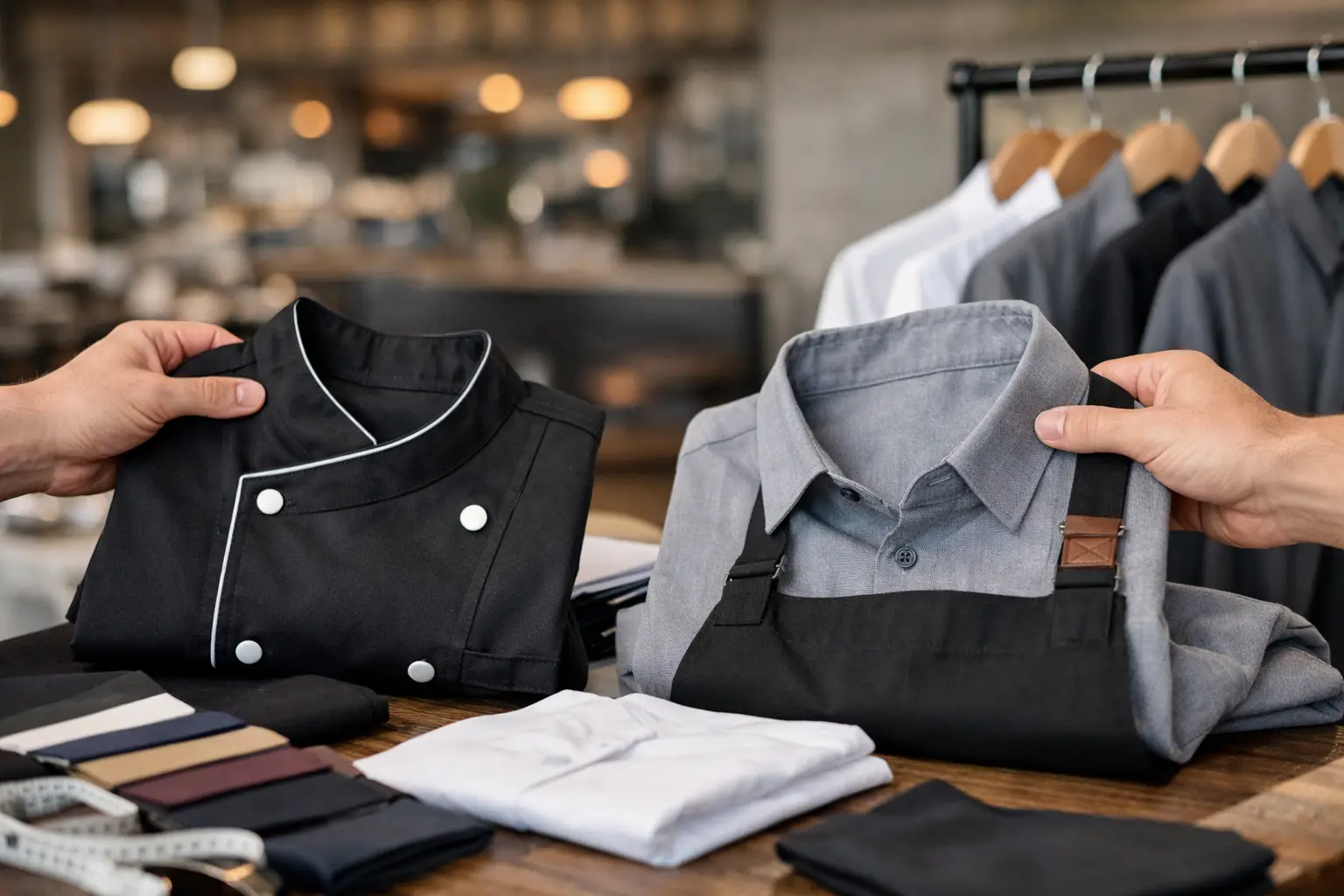
Broad product access matters as well. Your organization may begin with embroidered polos, then later need scrubs, safety workwear, chef coats, school spirit wear, name badges, patches, or promotional products. A supplier that can manage those needs under one roof helps protect your brand standards and reduces the work of coordinating multiple vendors.
At United Uniforms / Sew Shore, local organizations have relied on that kind of practical support since 1986. Experience is valuable when it translates into better recommendations, careful decoration, and clear communication from the first garment choice through delivery.
Consider the Total Cost, Not Just the Unit Price
The lowest per-item price can become costly if the shirts shrink, fade, fit poorly, or need to be replaced sooner than expected. A better approach is to compare total value: garment quality, decoration durability, expected wear, reorder availability, and the service required to manage the program.
For a one-day event, a cost-conscious printed T-shirt may be exactly right. For customer-facing staff who wear branded apparel several days a week, investing in a stronger polo or work shirt can be the more economical decision over time. There is no single best uniform for every organization. The right choice depends on wear frequency, working conditions, budget, and the impression your team needs to make.
Build a Program That Can Grow With Your Organization
Uniform needs rarely stay fixed. Teams expand, seasons change, employees move into new roles, and branding evolves. Set up a program with a few approved core garments and clear decoration standards, then review it periodically. This gives managers structure while leaving room to adapt.
When you choose a supplier that understands your work, your logo, and your reorder needs, uniforms become easier to manage and more effective at representing your organization. Start with the people who wear the apparel every day, and choose a partner prepared to support them long after the first order is delivered.