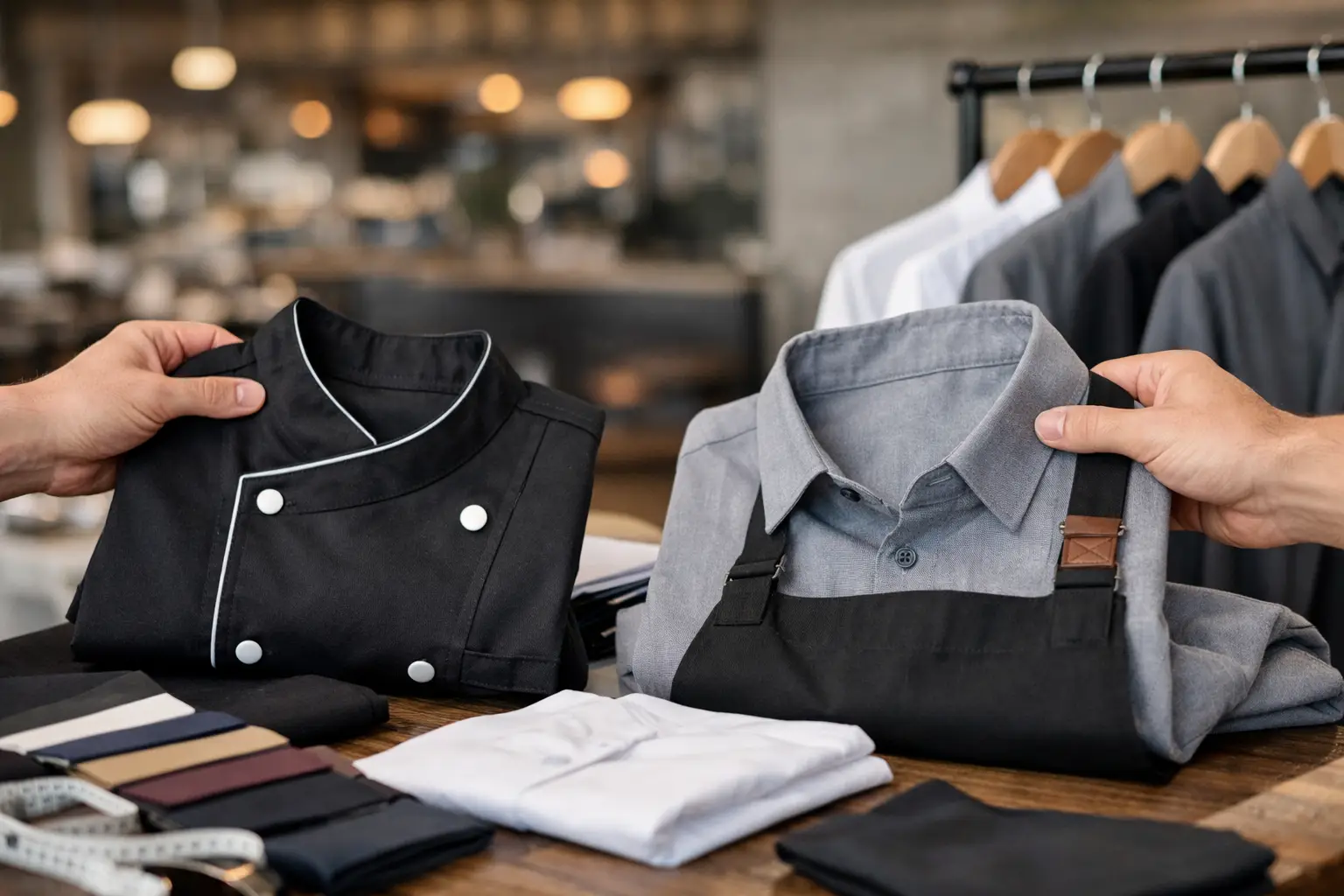
A workwear order becomes visible the moment your team walks through a customer’s door, enters a jobsite, or reports for a shift. The right bulk workwear order supplier does more than sell shirts and pants. They help you create a consistent, practical uniform program that fits the work, represents your organization well, and remains manageable when you need to reorder.
For Southwest Florida businesses, that means accounting for heat, humidity, active jobs, changing staff sizes, and the need to look polished without making daily uniforms complicated. Whether you are outfitting a construction crew, medical office, restaurant team, municipal department, or service business, supplier selection has a direct effect on quality, timing, and your team’s confidence in what they wear.
Start With the Work, Not the Catalog
A large catalog can be helpful, but it should not be the first thing driving your decision. Start by defining what the garment needs to do. A front-desk team may need professional polos, button-downs, cardigans, and name badges. A landscaping crew needs breathable shirts that stand up to sun, dirt, repeated washing, and movement. A healthcare practice may need coordinated scrubs in approved colors with embroidered names and credentials.
Comfort is operational, not just cosmetic. When employees are working outdoors in Florida heat, heavy or poorly chosen fabrics can become a daily frustration. When staff work around guests or patients, garments that wrinkle quickly, fade early, or fit inconsistently can undercut the professional image you are trying to build.
A knowledgeable supplier should ask about your environment, job duties, required safety features, laundering expectations, and budget before pointing you toward products. There is no single best workwear line for every organization. The best choice depends on how the garments will be worn and how often they will be replaced.
What a Bulk Workwear Order Supplier Should Handle
Bulk ordering is easier when one partner can manage the details from garment selection through finished delivery. That includes access to dependable apparel brands, sizing support, logo preparation, decoration, proof approval, production coordination, and reorders.
The most useful suppliers can also recommend decoration methods based on the garment and the design. Embroidery is a strong choice for polos, button-downs, jackets, hats, bags, and many professional uniforms. It offers a dimensional, durable finish, especially for left-chest logos and individual names. Screen printing often makes more sense for larger artwork, event shirts, high-visibility graphics, or higher quantities where a bold printed design is the goal.
Patches, monograms, and specialty applications can also be the right fit for certain uniforms. The key is receiving a recommendation that considers wear, fabric, logo detail, and quantity rather than a one-size-fits-all answer.
Confirm What Happens Before Production
A clear proofing process protects everyone. Before production begins, you should know how your logo will look, where it will be placed, what thread or ink colors will be used, and whether names, departments, or job titles are included. Small details matter. A logo that looks good on a website may need adjustment to stitch cleanly at a small size on a polo.
Ask whether your supplier reviews artwork for decoration, provides a proof for approval, and keeps approved logo files on record for future orders. Those steps reduce the chance of surprise results and make later reorders much faster.
You should also understand the approval deadline. Production timelines usually begin after artwork, garment selections, sizes, and proofs are approved. Delays in any of those areas can affect the final delivery date, particularly when a program includes multiple garment types or personalized names.
Look Beyond the First Order
The first order is important, but your long-term experience often matters more. New hires need uniforms. Seasonal employees come and go. Managers may need a new outerwear option, or a department may expand from polos into hats, safety shirts, or promotional products for an event.
A supplier that maintains your logo specifications and order history can help keep those additions consistent. Your navy polo should remain the same navy polo, your logo placement should remain consistent, and your staff should not need to restart the process each time someone joins the team.
Ask practical questions before committing to a program: Can individual employee orders be added later? Are the most popular items likely to remain available? What happens if a selected garment is discontinued? Can the supplier offer a comparable replacement that matches the rest of the program? A dependable partner will discuss these possibilities honestly instead of promising that inventory will never change.
Compare Value, Not Just Unit Price
It is reasonable to compare pricing, especially for a large order. But the lowest garment cost does not always produce the lowest total cost. An inexpensive shirt that shrinks, loses color, or needs replacing within a few months can cost more than a better-quality alternative. The same applies to decoration that cracks, puckers, or fails to hold up through regular washing.
Compare quotes based on the complete order: garment brand and style, decoration method, number of locations, personalization, setup costs if applicable, and expected turnaround. Make sure you are comparing like for like. A quote for a basic cotton tee with a one-color print is not directly comparable to a moisture-wicking performance shirt with embroidered names.
There are times when a value-focused item is exactly right. A one-day volunteer event, a short-term promotion, or a large giveaway may not require premium garments. For year-round employee uniforms, higher-quality materials and decoration generally offer better value because they support a consistent appearance over time.
Give Sizing the Attention It Deserves
Sizing is one of the most common sources of avoidable bulk-order issues. Apparel sizing varies by brand, style, and cut. A medium in a unisex tee may fit very differently from a medium in a women’s polo or a performance quarter-zip.
Whenever possible, use size samples or a fitting process before placing a large order. This is especially valuable for uniform programs with several garment categories, including outerwear, pants, scrubs, or safety apparel. It gives employees a chance to confirm fit and helps the person managing the order avoid guessing based on labels alone.
Build realistic size ranges into the order. Ordering only the most common sizes can leave new employees without usable uniforms, while ordering too broadly can create excess inventory. Your supplier can help review past ordering patterns and recommend a practical mix when you are establishing an ongoing program.
Evaluate Service When the Details Change
Bulk workwear orders rarely stay perfectly simple. A logo may need to be updated. A staff member may require a different fit. A department may add a second location to its uniform. An event date may move up. These are the moments when responsive, informed service becomes especially valuable.
Look for a supplier that answers specific questions directly, explains trade-offs, and takes ownership of the production process. Local experience can be particularly useful when you need to review garments in person, coordinate a fitting, discuss logo placement, or resolve an issue without working through a distant call center.
United Uniforms / Sew Shore has served Naples-area organizations since 1986, combining a local uniform store with in-house embroidery, screen printing, patches, and custom apparel support. For organizations managing recurring uniform needs, that combination can make it easier to move from an initial idea to an organized program built around real working conditions.
Questions Worth Asking Before You Order
Before approving a supplier, ask how they recommend garments for your work environment, what decoration method they suggest and why, how proofs are handled, and what the expected timeline is after approval. Confirm minimum quantities, policies for personalized items, payment expectations, and whether customer-supplied garments can be decorated.
It is also useful to ask who will be your point of contact if an item is backordered or a size needs to change. Clear communication upfront is often the best indicator of how an order will be handled when something unexpected occurs.
The right uniform program should make your team’s day easier, not add another administrative task to your week. Choose a supplier that listens closely, explains the options clearly, and treats every finished garment as part of the reputation your organization wears in public.