A front desk team in mismatched tops sends one message. A team in coordinated employee name monogram shirts sends another – organized, approachable, and ready to help. For businesses in healthcare, hospitality, schools, offices, and field service, that difference shows up fast in customer trust and day-to-day efficiency.
Employee name monogram shirts are not just about adding a stitched name to a garment. They are part of how your staff is seen, how your brand is remembered, and how smoothly your operation runs. When employees can be identified quickly and your apparel looks consistent across departments, your team appears more professional from the first interaction.
Why employee name monogram shirts matter on the job
The value starts with recognition. Customers, patients, parents, and visitors feel more comfortable when they know who they are speaking with. In a medical office, a clear first name on a scrub top helps patients feel at ease. In a restaurant, it makes service more personal. In a school or municipal setting, it supports both professionalism and accountability.
There is also an internal benefit. Uniforms with names and monograms reduce confusion in shared workspaces, especially when departments wear similar colors or garment styles. This matters in laundry programs, multi-shift environments, and larger organizations where staff members may not know everyone by name.
Brand presentation is the other major reason businesses choose this option. A logo alone identifies the company. A logo paired with an employee name creates a more complete uniform system. It shows thought, consistency, and attention to detail – all qualities customers often associate with the service they are about to receive.
Choosing the right shirts for names and monograms
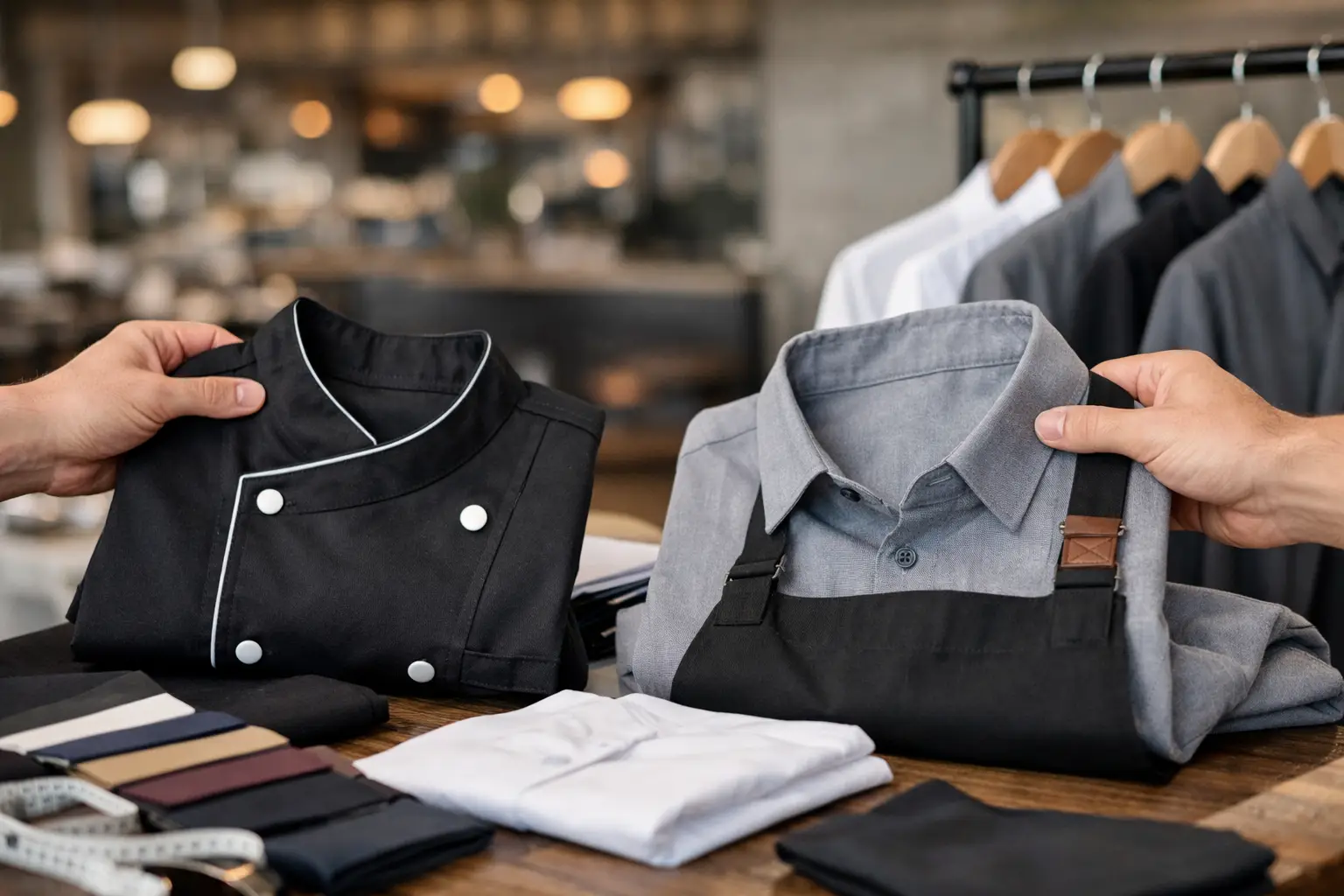
Not every shirt decorates the same way, and this is where many businesses make costly decisions. A lightweight fashion tee may look good on day one but may not hold embroidery well over time. A structured polo, woven button-down, work shirt, or scrub top often gives a cleaner result and better long-term wear.
Fabric matters. Cotton-rich styles can feel comfortable and familiar, but they may shrink or fade faster depending on care. Performance blends resist wrinkles and moisture better, which can be useful for hospitality teams, field crews, and active staff. The right choice depends on where the shirt will be worn, how often it will be washed, and how polished it needs to look at the end of a long shift.
Fit matters too. If your team includes front office staff, warehouse employees, healthcare workers, and managers, one shirt style may not suit every role. Sometimes a unified color palette with role-specific garment options works better than forcing everyone into the same item. That keeps the brand consistent without ignoring comfort or job function.
Embroidery versus printed names
For most businesses, embroidery is the preferred finish for employee names and monograms because it looks permanent and professional. It holds up well through repeated laundering and gives polos, jackets, button-downs, and workwear a more established appearance.
Printing can still make sense in some cases. If you need lightweight tees for events, seasonal staff, or short-term promotions, a printed name may be more budget-friendly. The trade-off is durability and appearance. Embroidery usually costs more upfront, but it tends to deliver a better return for daily uniform use.
Placement makes a difference
Left chest placement is the most common choice because it is clean, easy to read at conversational distance, and compatible with logos. In many programs, the logo sits on one side while the employee name is placed opposite it or directly beneath. That sounds simple, but spacing, stitch size, and garment seams all affect how readable the result will be.
Small names can disappear on dark fabrics. Oversized monograms can look out of place in a corporate setting. The best result is balanced and practical, not decorative for its own sake.
What businesses should decide before ordering
The most successful uniform orders usually start with a few clear standards. First, decide how names will appear. Will you use first names only, first name with last initial, or full names? In customer-facing roles, first names often feel friendlier. In more formal or institutional settings, full names may be appropriate.
Next, decide whether every employee gets the same treatment. Managers may need a different shirt style. Housekeeping teams may need different fabrics than front desk teams. Medical practices may want color coding by role while keeping name embroidery consistent across all garments.
Then think about turnover and reorders. If your staff changes often, personalized apparel requires planning. Some organizations order a small extra stock of non-personalized branded shirts for temporary team members, then place named orders for long-term hires. Others build ongoing reorder processes into their uniform program. The right setup depends on your hiring pattern and budget tolerance.
Consistency is what makes the program look polished
A one-time order can improve appearance, but a repeatable standard is what keeps a company looking sharp over time. That means using the same thread colors, the same name format, and the same approved garment families when possible. If one employee has script lettering, another has block font, and a third has a different logo size, the team image starts to unravel.
This is where working with an experienced local production partner helps. You want artwork on file, decoration standards documented, and someone who can match previous orders rather than starting over each time. For growing businesses and institutions, that consistency saves time and prevents expensive do-overs.
Where employee name monogram shirts make the biggest impact
Healthcare practices often benefit the most because staff identification affects both patient comfort and workflow. Scrub tops, polos, lab coats, and jackets with embroidered names help patients know who is helping them and support a more professional clinical environment.
Restaurants and hospitality teams use named uniforms to make service more personal. Guests remember names, and managers appreciate the polished appearance. For front-of-house teams, the right shirt can support brand image as much as signage or menus do.
Schools, civic departments, and nonprofit organizations often need apparel that balances professionalism, durability, and clear identification. Embroidered names can support security, visitor interaction, and a more unified look across staff roles.
Office teams and sales staff use employee name monogram shirts differently. In these settings, the goal is usually not heavy-duty wear but clean presentation. A well-fitted polo or woven shirt with tasteful embroidery can make trade shows, client visits, and day-to-day office operations feel more cohesive.
Common mistakes to avoid
The first mistake is choosing price over purpose. An inexpensive shirt that twists, fades, or loses shape after a few washes does not stay inexpensive for long. Replacement costs and poor presentation add up quickly.
The second is skipping wear-testing. If possible, test one or two garments before placing a larger order. This matters when you are balancing comfort, stain resistance, climate, and embroidery performance in Southwest Florida conditions.
The third is underestimating lead time. Personalized apparel usually takes more coordination than blank stock. Names must be confirmed, spelling must be accurate, and decoration layouts must be approved. If your team needs uniforms for a grand opening, school start date, or busy season, planning ahead makes a real difference.
A final mistake is treating the shirt as an isolated purchase instead of part of a broader identity system. The best programs consider logo placement, color consistency, outerwear, hats, and even promotional items together. That creates a stronger visual impression and makes future ordering easier.
Getting the best result from your uniform partner
A good apparel partner should ask questions before quoting the job. What roles are wearing the shirts? How often will they be washed? Do you need men’s and women’s sizing? Will the program require individual names every month? Those details affect product choice and decoration method.
They should also help you think through practical issues, not just artwork. If your staff works outdoors, breathable performance polos may be the smarter option. If your environment is formal, a woven shirt with subtle embroidery may fit better. If you need both retail-quality presentation and reliable production, experience matters.
For businesses across Naples and Southwest Florida, that local guidance has real value. A team that knows how different industries use branded apparel can steer you toward shirts that look right, wear well, and stay consistent over time.
Employee name monogram shirts work best when they are built around the realities of your workplace, not just a catalog page. When the fit, fabric, decoration, and reorder process are handled properly, the result is simple but powerful – a team that looks ready, feels confident, and represents your business well every day.