A uniform program can look polished in the catalog and still create problems on the first workday. Pants that are too long become a safety concern, fitted shirts restrict movement, and a stack of unused garments ties up budget. Knowing how to size staff uniforms before an order is placed helps your team look consistent, work comfortably, and avoid the disruption of exchanges.
For organizations in healthcare, hospitality, schools, government, construction, and customer-facing businesses, sizing is not a minor ordering detail. It affects morale, productivity, appearance, and how confidently employees represent your organization. The most reliable approach combines clear garment choices, accurate measurements, and a process that gives staff a reasonable way to confirm their fit.
Start With the Job, Not the Size Chart
A size chart is necessary, but it is not the first decision. Begin by considering what employees need to do in the uniform. A front-desk team may prioritize a clean, tailored appearance. Restaurant staff need comfort through long shifts and frequent movement. Medical teams may need scrub styles with room for bending, pockets, and layers. Field crews may need durable workwear that fits over base layers without catching or restricting movement.
The same labeled size can fit very differently between brands and garment styles. A unisex polo, a women’s shaped polo, and a men’s traditional-cut polo are not interchangeable simply because each is marked medium. Fabric also matters. Stretch performance fabric may allow a closer fit, while a structured woven shirt or heavyweight work jacket generally needs more ease.
Before collecting sizes, decide which garments are required for each role and whether employees will wear them over other clothing. If your team works in Southwest Florida heat, lightweight moisture-wicking options may be appropriate for outdoor roles. If staff move between cold indoor spaces and outdoor work, plan for layers and size outerwear accordingly.
How to Size Staff Uniforms With a Simple Process
The best sizing process is consistent, documented, and easy for employees to follow. Avoid relying on a manager’s estimate or assuming an employee’s size in one brand will translate to another. Instead, use the garment manufacturer’s chart for the exact item being ordered.
Build a clear sizing form
Give each employee a simple form that identifies the garment name, style number, available sizes, color, and fit category. Include separate lines for shirts, pants, outerwear, and specialty items. If names, departments, patches, or title embroidery will vary, capture those details at the same time so the order remains organized from the start.
Ask staff to provide their preferred size only after reviewing the relevant size chart or trying on a sample. For pants, collect waist and inseam when those options are available. For shirts and jackets, chest or bust measurements are usually more useful than a person’s usual retail size.
It also helps to establish one contact person who can review forms for missing information. This keeps the order from being delayed by a few unclear entries and gives employees a private way to ask fit-related questions.
Measure the body accurately
For a basic uniform fitting, use a flexible measuring tape and take measurements over light clothing. Measure the fullest part of the chest or bust, the natural waist, and the fullest part of the hips when the garment chart calls for those measurements. For sleeves and jackets, shoulder width and sleeve length may also matter. For pants, measure the waist where the employee will actually wear the waistband, then confirm the inseam.
Measurements should be snug but not tight. The goal is not to create a custom-tailored garment from body measurements. It is to identify the correct range on a manufacturer’s chart. If someone falls between sizes, the job and garment fabric should guide the choice. A server reaching overhead, a technician climbing into vehicles, or a nurse working a long clinical shift will often be more comfortable sizing up. A structured corporate shirt may look better in the closer size if the employee can move freely.
Use samples whenever the order is meaningful
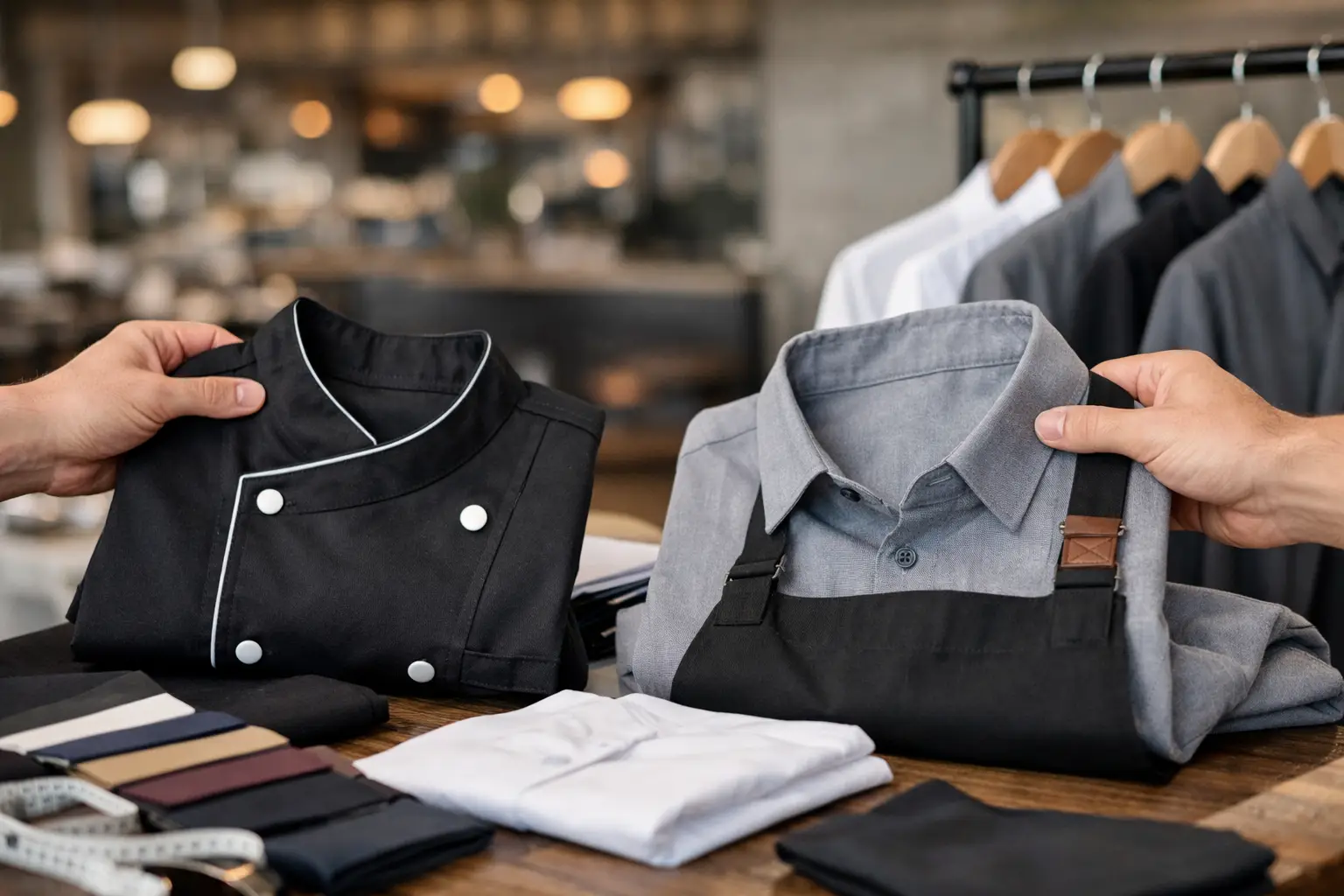
Samples are the most effective way to reduce size-related surprises. If possible, arrange a fitting set in the exact styles and brands under consideration. Employees can try garments over the clothing they typically wear to work, sit down, lift their arms, bend, and check pocket placement.
A sample fitting is especially valuable before ordering embroidered polos, logoed jackets, or decorated workwear. Once a garment has been embroidered, printed, or patched, it may not be eligible for a standard return. Confirming fit before decoration protects both your budget and your timeline.
For larger teams, schedule a short fitting window by department. Label sample sizes clearly and have a coordinator record selections as employees try them on. This is faster and more accurate than passing around a general size chart without context.
Plan for Fit Differences Across Your Team
Uniform consistency does not mean every employee must wear the same cut. Offering a few approved styles often improves the overall appearance because people can choose a fit that suits their body and job. For example, a hospitality team may have the same logo, color, and professional standard while choosing between men’s, women’s, unisex, short-sleeve, and long-sleeve options.
This approach also supports a more inclusive uniform program. Staff should not have to force a fit because the available range is too narrow or because the selected garment was designed for only one body type. Review available size ranges before finalizing a style, including extended sizes and tall or petite options when needed.
Keep in mind that fitted and fashion-forward garments can create more exchange requests than classic uniform cuts. A modern silhouette may be right for a boutique retail team or an office setting, but it may not be the best choice for a physically active crew. There is always a balance between a sharp visual presentation and dependable day-to-day comfort.
Account for Shrinkage, Layers, and Movement
Uniforms are work garments. They need to fit after laundering, during a busy shift, and across the conditions employees actually face. Review care instructions before choosing a size. Cotton-rich garments can shrink, especially when washed and dried on high heat. Preshrunk fabric reduces that risk but does not eliminate it. Performance fabrics may hold their size well, though they can feel different than traditional cotton blends.
Outerwear needs particular attention. A jacket that fits neatly over a T-shirt may be too restrictive over a polo, scrub top, or sweatshirt. If employees routinely layer garments, conduct the fitting with those layers in place. The same principle applies to high-visibility workwear, chef coats, and protective garments.
Movement is another practical test. Staff should be able to reach, bend, sit, walk, and perform routine tasks without pulling at seams or constantly adjusting the garment. A uniform that looks right while standing still may not work on the job.
Set an Exchange Plan Before Ordering
Even with good measurements and samples, a few fit adjustments are normal. The key is planning for them before the order is decorated and distributed. Ask your uniform provider about sample availability, ordering minimums, lead times, size-run requirements, and the policy for undecorated versus decorated items.
For new hires and turnover-prone roles, consider keeping a small stock of blank or approved logoed essentials in commonly requested sizes. This can prevent a new employee from starting without a uniform while a replacement order is produced. The right stock level depends on your team size, hiring pace, and whether garments include individualized names or titles.
Maintain a private record of approved sizes by employee and garment style. That makes reorders much easier, but review the information periodically. A size selected for one polo brand may not apply to a different style added later.
Make Uniform Sizing Part of a Professional Rollout
Good uniform sizing starts before the logo is placed and continues after the first delivery. At Sew Shore, the most successful programs are the ones that treat fit as part of the overall brand presentation, alongside garment selection, decoration method, and distribution planning.
Give employees clear instructions, provide samples when possible, and choose garments based on the work they actually perform. When staff feel comfortable and confident in what they wear, the uniform does its job: it helps the team look prepared, recognizable, and ready to serve.