A polo that looks sharp on day one but shrinks, fades, or feels uncomfortable by week three is not a good uniform investment. Knowing how to choose branded workwear means looking beyond the logo and selecting apparel your team will actually wear with confidence. The right program supports your brand, fits the job, and makes reordering straightforward as your staff grows.
For Southwest Florida businesses, climate is often part of the decision. A front-office team, landscaping crew, medical practice, restaurant staff, and municipal department may all need branded apparel, but they do not need the same garment. Start with the day-to-day work, then build a uniform program around the people wearing it.
Start With the Job, Not the Catalog
The first question is simple: what must this clothing do during a normal shift? A customer-facing sales team may need polished polos, button-down shirts, layers, and name embroidery. A construction or service crew may need moisture-wicking shirts, durable work pants, high-visibility options, and outerwear for rainy days. Healthcare teams may need scrubs that meet workplace expectations while remaining comfortable through long shifts.
Think through the physical environment, too. Indoor teams may prioritize a tailored appearance and easy-care fabrics. Outdoor teams need breathable materials, sun protection, mobility, and colors that remain presentable after repeated washing. Hospitality uniforms need to complement the guest experience while holding up to frequent laundering and the pace of service.
It is also worth separating required items from optional pieces. A core uniform might include two or three branded shirts for every employee, while jackets, hats, or quarter-zips are available for supervisors, field staff, or seasonal use. This approach controls the initial budget without limiting your ability to expand later.
Choose Fabric for Comfort, Durability, and Care
Fabric affects how a uniform feels, performs, and represents your business. Cotton is soft and familiar, but it can retain moisture and may require more attention to prevent shrinking or wrinkling. Polyester is durable, colorfast, and often effective for moisture management. Blends can offer a practical middle ground, combining comfort with easier care and better shape retention.
For teams working in Florida heat, performance fabrics are often a strong choice. Moisture-wicking polos and tees help employees stay more comfortable outdoors or in active roles. That said, not every performance garment is right for every decoration method. Lightweight, stretchy fabric may require a different approach than a traditional cotton shirt, particularly when the logo includes fine detail.
Care instructions matter as much as first impressions. If employees will wash uniforms at home, choose garments that can handle regular laundering without special treatment. A slightly higher-quality shirt often costs less over time when it maintains its color, shape, and professional appearance through many wash cycles.
Match the Decoration Method to the Garment and Logo
Your logo should look intentional, readable, and appropriate for the garment. Embroidery, screen printing, patches, and heat-applied graphics each have a place in a branded workwear program.
Embroidery is a dependable option for polos, woven shirts, jackets, hats, bags, and many uniforms. It provides a textured, established look that works especially well for left-chest logos, names, and department identification. Very small lettering, tiny details, or large filled-in logo areas may not reproduce as clearly in thread, so artwork may need to be simplified for the best result.
Screen printing is often the practical choice for T-shirts, event apparel, team shirts, and larger back designs. It can create bold, high-impact graphics and is generally cost-effective for larger quantities of the same design. The trade-off is that screen printing usually works best when orders include enough pieces to justify the setup and when the artwork is suited to the selected ink colors.
Patches can create a distinctive, durable finish for uniforms, outerwear, hats, and specialty apparel. They are particularly useful when a logo has a badge-like shape or when your organization wants a more dimensional presentation. Heat-applied options can be useful for certain performance garments and individual names or numbers, but the garment, placement, and expected wear should guide the choice.
A knowledgeable decorator should review your logo before production. A design that looks excellent on a website may need adjustments to stitch cleanly at a small size or print clearly on a dark fabric. This is not a compromise in branding. It is how your brand stays recognizable on the garments people see up close.
Build a Consistent Look Without Making Every Role Identical
Consistency does not require putting every employee in the same shirt. A well-planned program can use coordinated colors, logo placement, and garment styles while recognizing that departments have different needs.
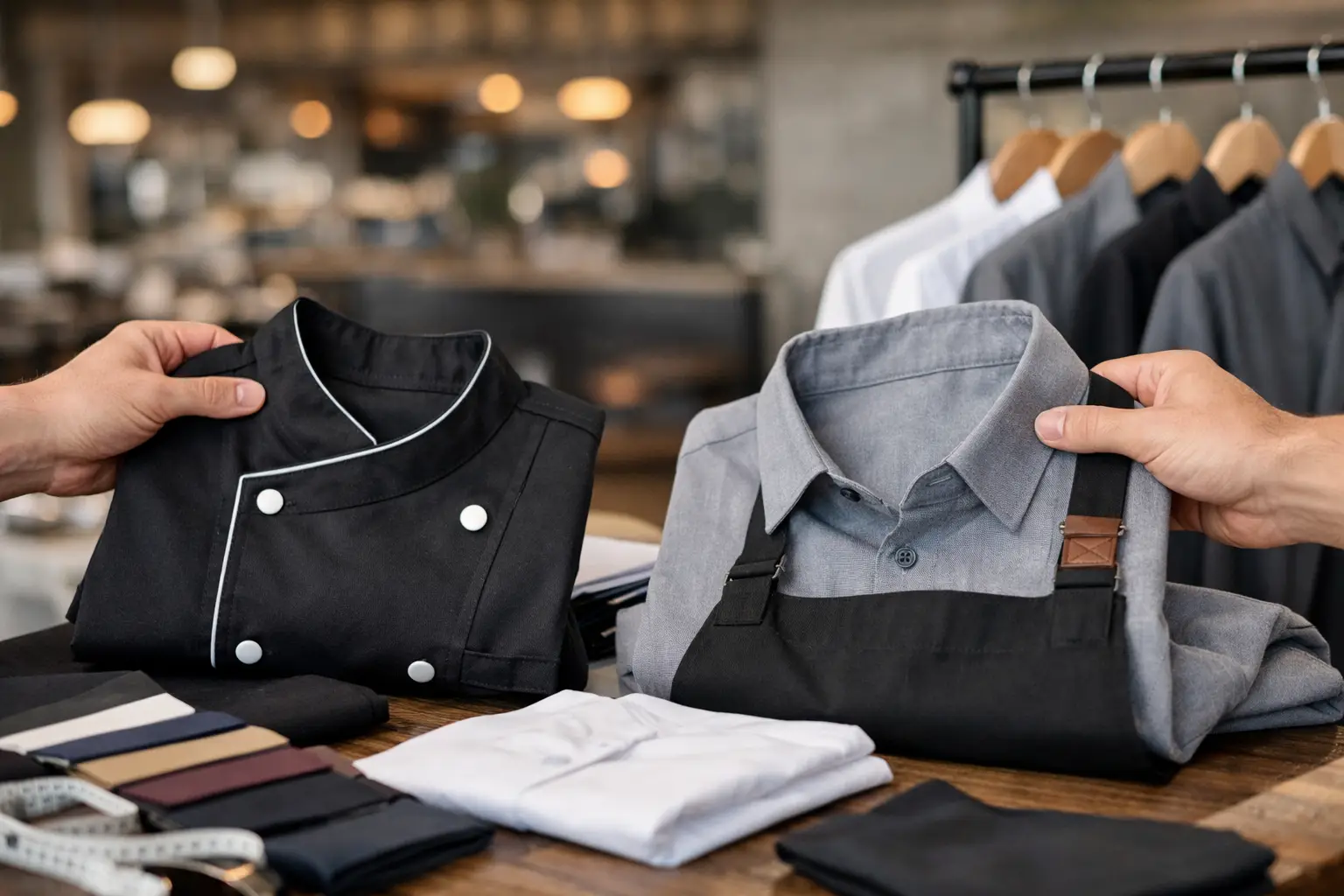
For example, an office team may wear embroidered polos or button-downs, while technicians wear the same logo on moisture-wicking work shirts. Restaurant managers may wear branded woven shirts while kitchen staff uses durable tees, aprons, or chef apparel in complementary colors. The result still feels like one organization because the visual standards remain consistent.
Create a few rules before ordering: approved logo versions, brand colors, preferred garment colors, standard logo placement, and whether employee names or titles are included. These decisions reduce confusion when new employees are hired or a department needs additional pieces months later.
Get Sizing Right Before Placing the Full Order
Sizing is one of the most common sources of uniform frustration. Brand sizing varies, and a medium in one product may fit differently than a medium in another. When possible, review samples or arrange a fitting process before committing to a large order.
Offer a reasonable range of men’s, women’s, and unisex options where appropriate. A consistent uniform should not force employees into a fit that is uncomfortable or unsuitable for their role. Consider garment length, sleeve style, stretch, layering needs, and the movement required on the job.
Avoid ordering only to a manager’s estimate of sizes. A simple size collection process saves time, reduces exchanges, and helps employees feel considered from the beginning. For organizations with regular turnover, keep a small inventory of common sizes or establish a repeat-order plan for fast additions.
Set a Budget Around Wear Life, Not Just Unit Price
The lowest-priced shirt is not always the best value. If it becomes thin, misshapen, or faded quickly, your team may need replacements sooner than expected. The same is true when a decoration method does not suit the garment or the work environment.
A useful approach is to establish a budget for the initial issue, then compare garment quality, decoration, expected life, and reorder availability. Consider how many pieces each employee needs to maintain a clean, professional rotation. A field employee working five days a week will likely need more shirts than a receptionist who wears branded apparel only on select days.
Also account for setup, artwork preparation, names, patches, and variable sizing in the total project cost. Clear expectations upfront make it easier to compare options honestly and avoid surprises after production begins.
Plan for Reorders Before You Need Them
Uniform programs rarely end with the first order. New hires, promotions, seasonal staff, lost items, and changing job roles all create future demand. Select styles and colors that are likely to remain available, and document the item numbers, decoration locations, thread or ink colors, and approved artwork.
This is where working with an established local provider can make a real difference. Sew Shore can help organizations keep their logo files, decoration details, and garment choices organized so future orders do not have to start from scratch. For larger teams, a structured ordering process can also help maintain control over who receives what and when.
Before approving production, confirm the expected turnaround time, proof process, minimums where applicable, and what happens if a selected item becomes unavailable. Supply changes do happen. Having acceptable substitute options identified in advance keeps a reorder from becoming an urgent problem.
Ask Questions That Protect Your Brand
A good uniform partner should be able to explain why a particular garment and decoration method fits your needs. Ask to see comparable examples, especially if your logo includes gradients, fine lines, small text, or multiple colors. Discuss how the apparel will be worn, washed, and stored instead of choosing solely from a product image.
It also helps to ask whether the logo placement will stay consistent across polos, outerwear, hats, and promotional items. Small details, such as the height of a left-chest logo or the thread color used on dark garments, are what make a program look organized rather than pieced together.
The best branded workwear feels like a natural part of the job. When employees are comfortable, the logo is clear, and reorders are easy, your team can focus on serving customers while your brand does its work in every introduction, appointment, shift, and handshake.