When a uniform has to work hard, the decoration has to work just as hard. That is why custom patches for uniforms remain a smart choice for schools, healthcare teams, restaurants, public agencies, and local businesses that need branding that lasts, looks professional, and stands up to repeated wear.
A good patch does more than display a logo. It creates a clean, consistent identity across a team, even when garment styles vary. It can also solve practical problems that direct embroidery or printing may not solve as well, especially on heavier workwear, outerwear, structured caps, bags, and specialty garments.
Why custom patches for uniforms still matter
Uniform programs are about more than appearance. They help employees look identifiable, organized, and ready to represent the business. For many organizations, patches offer a reliable way to keep that presentation consistent across departments and job roles.
One reason patches continue to perform well is durability. A properly produced and applied patch can handle frequent use while keeping edges, shape, and branding details intact. That matters in settings where uniforms are washed often, exposed to the elements, or worn in demanding conditions. In hospitality, a crisp branded patch can elevate a front-of-house look. In facilities, construction, or municipal work, it can give outerwear and heavier garments a professional finish without distorting the fabric.
Patches also offer flexibility. If a company uses polos for office staff, jackets for field crews, and hats for event teams, the same patch design can often carry across all of them. That consistency helps maintain a unified image without forcing every employee into one exact garment style.
Where patches make the most sense
Not every uniform item needs a patch, and not every logo should become one. The best choice depends on the garment, the work environment, and the level of detail in the design.
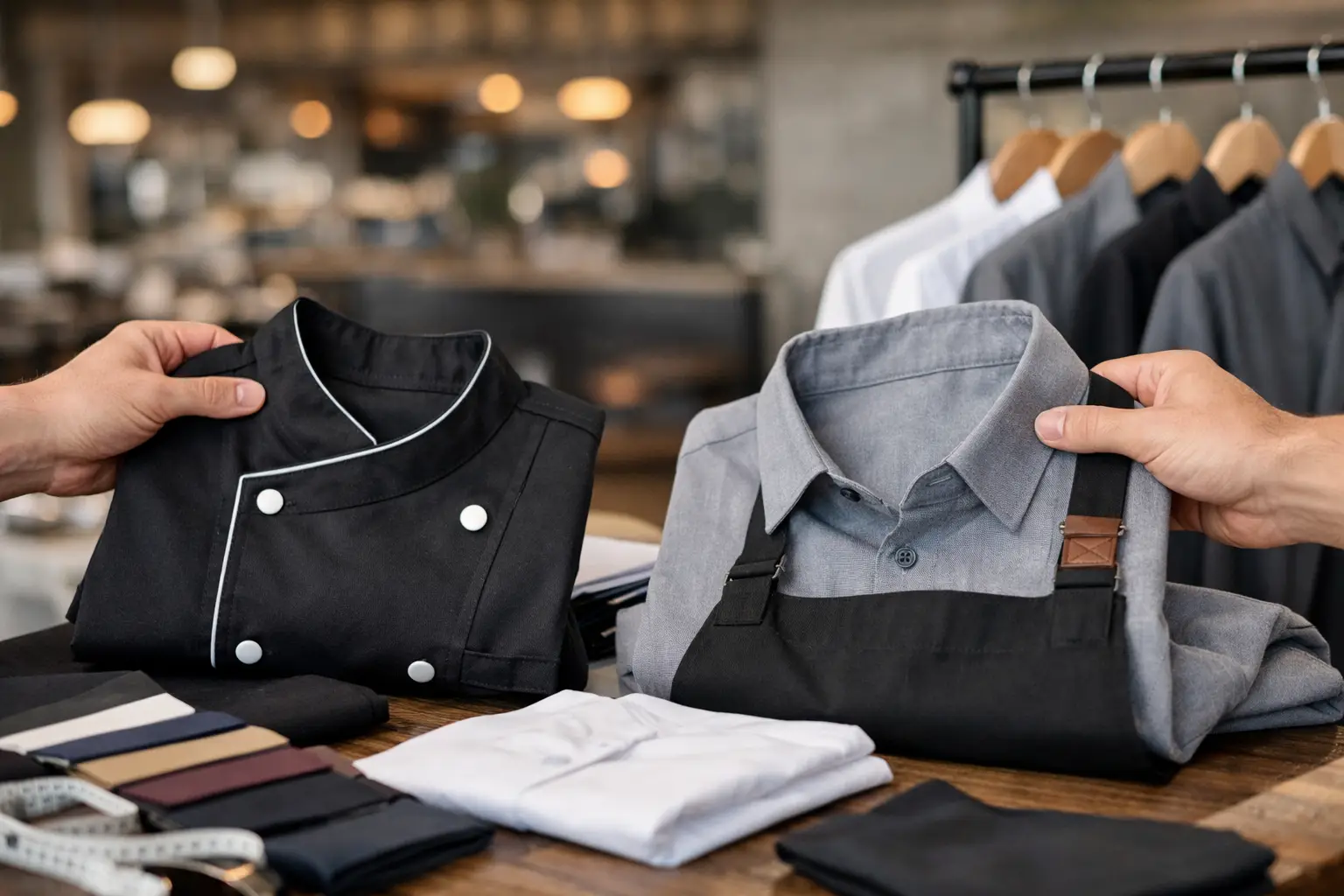
Patches are especially effective on structured garments and accessories. Think work shirts, mechanic shirts, chef coats, outerwear, tactical apparel, backpacks, duffels, and caps. These are items where a patch can sit cleanly on the surface and add visual presence. For organizations that need a more traditional or official appearance, patches can also communicate authority in a way that simple printing usually does not.
They are also useful when branding may need to change over time. Name, department, and role-based patches can be planned separately from a main logo patch, depending on the uniform program. That kind of setup is not right for every organization, but in some cases it helps manage turnover, promotions, or team assignments more efficiently.
Types of custom patches for uniforms
The right patch style depends on the image you want and how the uniform will be used. This is where experience matters, because the most attractive option on paper is not always the best one in the field.
Embroidered patches
These are the classic choice. Embroidered patches have texture, strong visual definition, and a traditional uniform look. They work well for logos with bold shapes, simple lettering, and a polished, established feel. Schools, public safety-related organizations, clubs, and long-standing local businesses often prefer this style because it feels familiar and dependable.
The trade-off is detail. Very fine text or intricate gradients may not translate cleanly in thread. If a logo is highly detailed, a different patch format may produce a better result.
Woven patches
Woven patches are a strong option when the design includes small lettering or finer detail. They have a flatter finish than embroidered patches, but they can reproduce more precision in compact spaces. For medical groups, hospitality brands, or corporate programs with more detailed marks, woven patches can be a better fit.
They may not deliver the same raised texture as embroidery, so the choice comes down to what matters more – visual detail or classic dimensional appearance.
Printed patches
Printed patches can handle complex logos, color transitions, and artwork that thread cannot reproduce well. They are useful for organizations with modern branding or graphic-heavy designs. For promotional uniform applications or specialty team apparel, they can be very effective.
That said, printed patches are not always the first choice when a client wants the traditional uniform feel associated with embroidery. Appearance, expected wear, and brand standards all factor into the decision.
Specialty and uniform-grade applications
Some projects call for more specific solutions, such as patches for tactical gear, industrial uniforms, flame-resistant garments, or high-visibility outerwear. In those cases, backing, stitch method, placement, and garment compatibility matter just as much as the patch face itself. A patch should not interfere with the purpose of the uniform.
Choosing the right backing and attachment method
This is one of the most overlooked parts of ordering patches. The patch itself may look great, but if it is attached the wrong way, the final result may not hold up the way the customer expects.
Sew-on patches are often the best long-term choice for working uniforms. They are secure, dependable, and appropriate for garments that go through frequent laundering and active use. For many organizations, this is the standard to compare everything else against.
Heat-applied options can work well in the right setting, especially when the garment and patch material are compatible. They can create a clean finish and support efficient production, but they are not ideal for every uniform type or care routine. Heavy washing, high heat, or rugged wear can affect performance if the application is not matched properly to the garment.
Hook-and-loop options are practical when patches need to be changed out, such as name tabs, role identification, or specialty uniforms. They offer flexibility, but they also create a different look and may not suit every brand image.
What makes a patch look professional
A professional patch is not just about the logo file. Size, border style, thread color, placement, and scale all affect the final result. A logo that looks excellent on a business card may need adjustment before it works well as a patch.
For example, text that is too small can disappear at uniform scale. Borders that are too thin may not hold shape as well as expected. A design with too many colors may raise cost or reduce clarity. Often, the strongest patch designs are slightly simplified versions of the original brand mark, built specifically for embroidery or weaving.
Placement matters too. Left chest is common, but not every garment or logo belongs there. Sleeve patches, cap fronts, shoulder areas, and bag panels each create a different visual effect. The right location depends on the uniform type, the viewing distance, and the role of the person wearing it.
Ordering patches for a uniform program
For a business or institution, the patch order should fit the broader uniform plan. That means thinking beyond the first batch.
If your team includes multiple departments, seasonal staff, or different garment categories, consistency should be built in from the start. That includes standardizing logo size, approved colors, placement rules, and attachment methods. Without that structure, even a well-made patch can produce an uneven brand image across the organization.
It is also worth planning for reorders. Uniform programs rarely stop after one purchase. Employees are added, garments wear out, and departments grow. Working with a provider that can manage repeat orders, match prior production, and advise on garment compatibility can save time and avoid costly inconsistency later.
That is especially important for local organizations that need practical support, realistic turnaround expectations, and a clear point of contact. A patch project usually goes more smoothly when the same team can help with the garments, decoration method, and artwork preparation together. For many Southwest Florida businesses, that is where an experienced local partner like Sew Shore brings real value.
Common mistakes to avoid
The biggest mistake is treating patches like an afterthought. When they are chosen late in the process, they can create problems with logo readability, garment fit, or production timing.
Another common issue is selecting a patch style based only on price. Budget matters, but so does use case. A lower-cost option that fails early or looks out of place on the uniform is not really the better value.
It is also easy to underestimate how much the garment itself affects the result. Stretch fabrics, lightweight polos, waterproof outerwear, and industrial garments all behave differently. A patch that works beautifully on a canvas jacket may not be right for a thin performance shirt.
The best patch is the one that fits the job
There is no single best patch for every uniform program. The right answer depends on your logo, your garments, your work environment, and how polished or rugged the finished look needs to be. A healthcare group may want clean detail and lighter presentation. A restaurant may want classic branding with durability through frequent laundering. A municipal department may need something that reads clearly, holds shape, and supports a more official appearance.
That is why the best patch decisions start with the actual job the uniform has to do. When the design, material, and application method are matched correctly, a patch becomes more than decoration. It becomes part of a uniform program that looks consistent, performs reliably, and reflects the standards of the organization behind it.
If you are planning new uniforms or updating an existing program, it helps to start with the real-world conditions first. The best-looking option is the one your team can wear with confidence, shift after shift.