A guest notices the host stand, the server, and the bartender before they read a menu or place an order. That is why custom hospitality uniforms matter. They do more than put a logo on a shirt. They help set expectations, support daily performance, and give your team a polished, consistent look that fits your brand.
In restaurants, hotels, resorts, country clubs, catering companies, and event venues, presentation is part of the service. Uniforms need to look sharp, but they also need to hold up through heat, movement, spills, repeated washing, and long shifts. The best program balances appearance, comfort, brand standards, and practical wear.
Why custom hospitality uniforms matter
Hospitality is a visual business. Guests form opinions quickly, and staff appearance is part of that experience. A clean, coordinated uniform helps communicate professionalism, attention to detail, and a sense of order. For front-of-house teams, that can reinforce the quality of your service. For back-of-house teams, it supports safety, consistency, and role identification.
There is also an operational benefit. When uniforms are selected with purpose, managers spend less time dealing with inconsistent dress, off-brand clothing, and last-minute replacement issues. A well-run uniform program makes onboarding easier, simplifies reorders, and helps maintain a consistent image across locations or departments.
That does not mean every business needs the same approach. A waterfront restaurant in Southwest Florida may need lightweight, breathable styles that handle humidity. A luxury hotel may want a more tailored look with elevated fabrics and embroidery. A catering company may need versatile pieces that can move from setup to service without looking worn halfway through an event. The right answer depends on the environment and the expectations of your guests.
What to consider before ordering custom hospitality uniforms
The first question is not color or logo size. It is how the uniform will be used. Start with the roles on your team. Hosts, servers, bartenders, kitchen staff, housekeeping teams, valets, and managers all work differently, and they should not be forced into the same garment if the job demands something else.
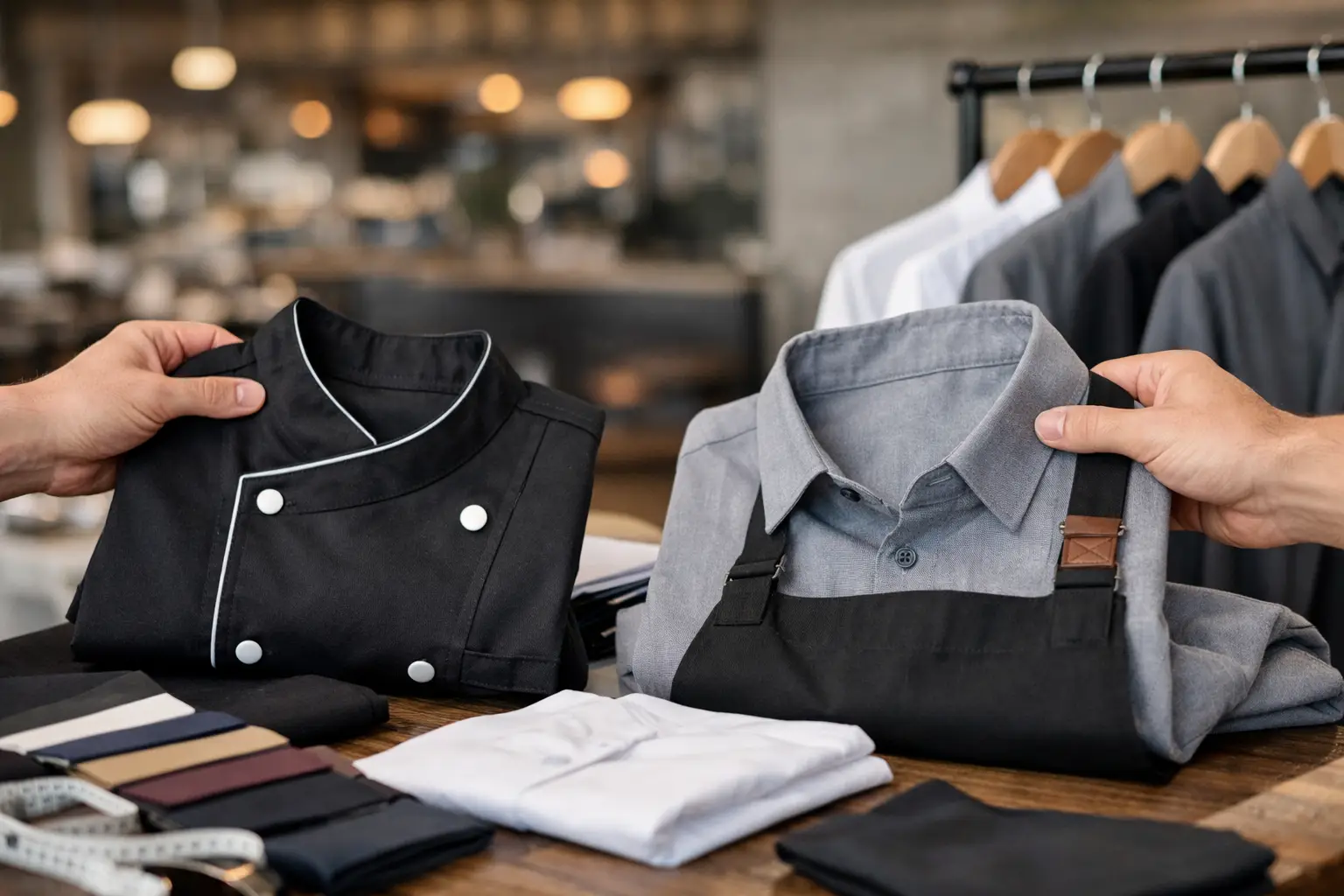
Fabric matters more than many buyers expect. Lightweight performance blends can help with airflow and ease of movement, while more structured woven shirts may create a dressier look. Aprons, chef coats, polos, button-downs, and housekeeping uniforms each serve different needs. The best choice often comes down to how much formality you want and how much wear the garment will take during a typical shift.
Fit is another common issue. If a uniform looks good on paper but fits poorly across your staff, it will not perform well. Hospitality teams usually need a size range that works for real people with different body types and job functions. That is one reason it helps to work with a supplier who can guide product selection instead of simply taking an order.
Branding should be intentional. Embroidery gives a polished, long-lasting look and is often a strong choice for polos, button-downs, outerwear, and aprons. Screen printing may work better for certain casual concepts or promotional event apparel. Patches, monograms, and name personalization can also add a professional touch, but only if they are used consistently.
Matching the uniform to the guest experience
A uniform should feel like part of the business, not an afterthought. If your restaurant has an upscale dining atmosphere, the uniform should support that tone with clean lines, refined colors, and decoration that feels understated. If your concept is casual and family-focused, a more relaxed uniform may make better sense.
This is where many businesses either overdo it or underdo it. Too formal, and the staff may look uncomfortable in the setting. Too casual, and the brand can lose credibility. The strongest hospitality programs are specific. They reflect the service style, the space, and the pace of the work.
Color is part of this equation. Dark colors can help hide stains and maintain a crisp appearance through long shifts. Lighter colors may feel more coastal, fresh, or upscale, but they often require more maintenance. In Southwest Florida, where heat and humidity are real factors, a good-looking fabric still has to be wearable in the local climate.
Custom hospitality uniforms for different roles
Front-of-house apparel usually needs to balance appearance with approachability. Hosts and servers often benefit from clean branded polos, woven shirts, aprons, or coordinated separates that keep the team aligned without looking overly stiff. Bartenders may need something similar but with added durability due to constant motion, spills, and washing.
Back-of-house uniforms have different priorities. Chef coats, kitchen shirts, aprons, and work-ready pants need to support safety, movement, and repeated laundering. Housekeeping and facilities teams need durable garments that allow bending, lifting, and long wear without becoming restrictive. Managers and supervisors may need elevated branded apparel that sets them apart while keeping them visually connected to the rest of the team.
When businesses try to force a single garment across every department, the result is often frustration. A better approach is to create a coordinated program. That means role-specific pieces with shared branding, colors, or decoration standards. The team still looks unified, but each person has apparel that suits the actual work.
The value of local, hands-on uniform support
Ordering uniforms online from a distant vendor can seem simple at first. The problems usually show up later. Sizes run differently than expected. Decoration placement is off. Reorders do not match the original batch. Communication slows down when you need adjustments quickly.
For hospitality businesses, that kind of delay is more than an inconvenience. It affects openings, staff readiness, and the guest experience. Working with an established local partner gives you the advantage of direct communication, product guidance, and a clearer path from concept to delivery.
That matters when you need help choosing garments, deciding between embroidery and screen printing, coordinating names or departments, or planning for future reorders. It also matters when your business grows and you need a uniform program that can scale instead of being rebuilt every time you hire.
For many Southwest Florida businesses, that is where experience counts. A provider with in-house decoration capability and a long track record can help reduce mistakes, maintain consistency, and keep your brand looking professional across every order. That practical support is often what separates a smooth uniform rollout from a stressful one.
Common mistakes businesses make
One common mistake is choosing based only on price. Budget matters, but the cheapest option is not always the best value if garments fade, shrink, lose shape, or need constant replacement. A slightly better product can lower headaches over time.
Another mistake is skipping input from the people who will actually wear the uniform. Managers may focus on appearance, while staff quickly notice heat, stiffness, pocket placement, or restricted movement. Both perspectives matter. Good uniforms need buy-in from both operations and leadership.
Some businesses also wait too long to order. Uniforms tied to opening dates, seasonal hiring, or special events need lead time for product sourcing, decoration, and sizing coordination. Last-minute decisions usually shrink your options.
Finally, inconsistency can weaken the whole program. Different logos, mismatched colors, and unapproved substitutions create a scattered appearance. Setting clear standards early helps protect the brand and makes reordering easier.
Building a uniform program that lasts
The strongest uniform programs are designed for repeatability. That means choosing products that can be reordered, creating decoration standards that stay consistent, and planning for staff changes from the start. It also means thinking beyond the first order.
If you are launching a new concept, updating an existing brand, or refreshing a hospitality team’s appearance, it helps to work with a partner who can guide the full process. That includes garment selection, logo application, sizing support, and the practical details that keep things moving. A company like United Uniforms / Sew Shore has built its reputation by helping local organizations do exactly that, with the kind of hands-on service that businesses remember.
Custom uniforms should make daily operations easier, not more complicated. When they are chosen well, your team looks more confident, your brand feels more established, and your guests see the level of care you want to deliver before a word is spoken.
If your current uniforms are inconsistent, uncomfortable, or no longer match your brand, that is usually a sign it is time to rethink the program with the same care you bring to the rest of your operation.