A well-run apparel program solves a problem customers notice before anyone says a word: Does this team look prepared, consistent, and easy to identify? This corporate apparel branding guide is designed for Southwest Florida organizations that need more than a logo on a shirt. It helps you create clothing that fits the work, represents the brand well, and stays manageable when staffing, seasons, and ordering needs change.
Start With the Job, Not the Garment
The right corporate apparel begins with where and how your people work. A front-desk team in a medical office has different needs than a restaurant crew on a patio, a municipal field team, or a real estate group meeting clients in the summer heat. Appearance matters in every case, but comfort, durability, visibility, and care requirements can matter just as much.
Before selecting styles, define who will wear the apparel and what they need to do in it. Consider indoor versus outdoor conditions, physical activity, customer interaction, safety requirements, laundry frequency, and whether employees will wear the item as a full uniform or layer it with their own clothing.
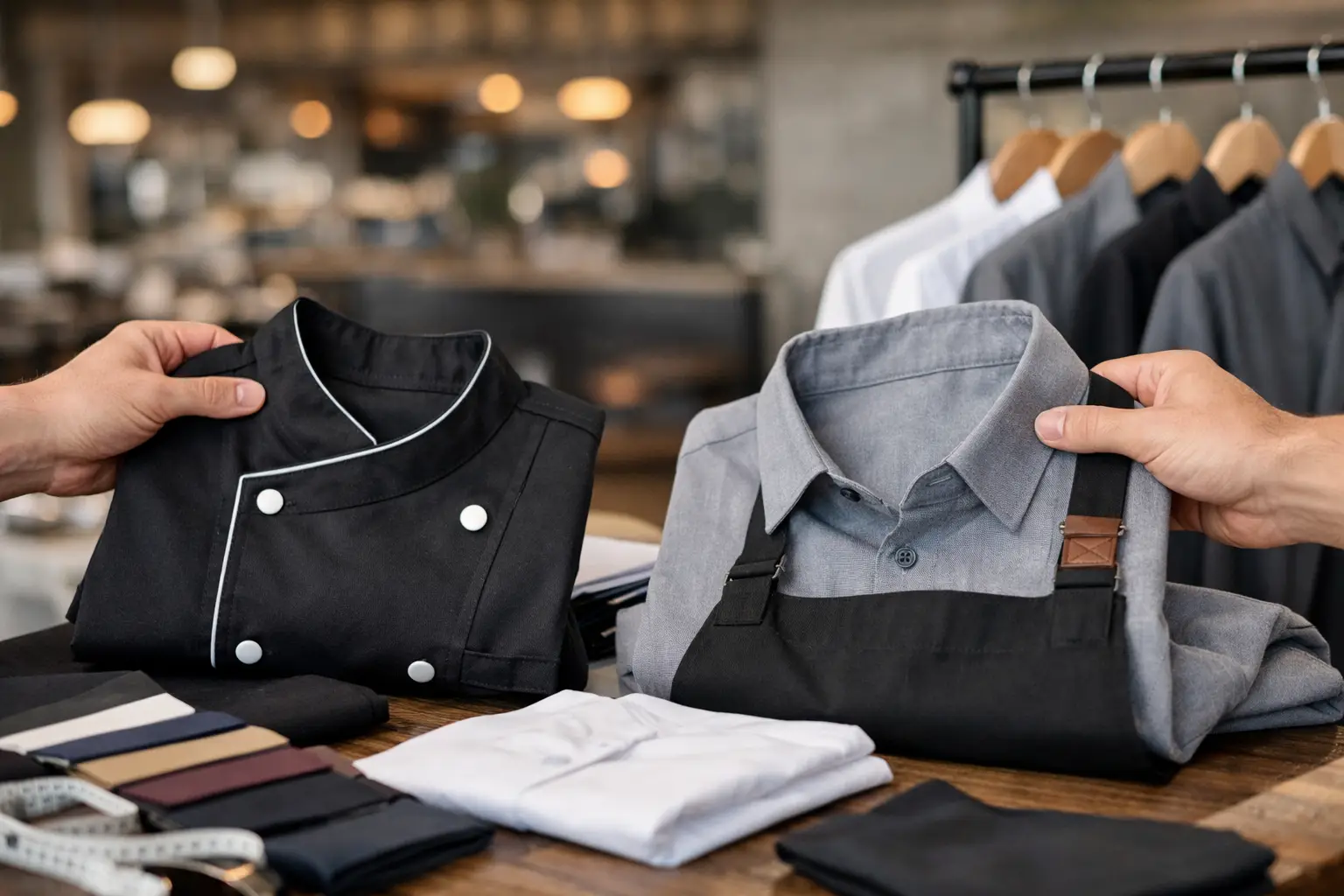
For example, embroidered polos may be a strong fit for office staff, sales teams, and golf-event volunteers. Breathable performance shirts can make more sense for landscaping, maintenance, coaching, and outdoor service crews. Hospitality teams may need a coordinated combination of branded button-downs, aprons, chef coats, or vests. One logo does not require one garment for every role.
A thoughtful program gives each department a consistent visual identity while allowing the clothing to perform in real conditions.
Build a Corporate Apparel Branding Guide Around Your Identity
Your logo is the starting point, not the entire uniform plan. Brand consistency comes from the relationship between the logo, garment color, decoration method, placement, and the way different roles look together.
Start with your approved logo files and brand colors. A detailed full-color mark may work beautifully on a promotional T-shirt but lose clarity when embroidered at a small size on a polo. Fine lines, tiny text, gradients, and closely packed details sometimes need a simplified embroidery version. This is not a compromise in quality. It is how you protect legibility and make the mark look intentional on fabric.
Logo placement should also match the garment and the setting. The left chest remains the most common choice for professional uniforms because it is visible without overpowering the garment. A larger back design can help field crews, event staff, and delivery teams become easier to identify from a distance. Sleeve decoration, names, titles, department designations, and patches can add useful detail, but only when they support the purpose of the piece.
Keep your color choices practical. White logos can look sharp on dark garments, while navy, charcoal, black, and royal blue often provide a professional base for daily wear. Light-colored garments can be comfortable in the Florida heat, but they may show stains more quickly in food service, healthcare support, maintenance, or outdoor work. The best choice depends on the job and the expected care routine.
Choose Decoration That Fits the Design and Wear
Embroidery and screen printing are both proven options, but they serve different needs. Selecting the right method early prevents surprises in appearance, cost, and durability.
Embroidery creates a polished, dimensional finish that works especially well for polos, woven shirts, jackets, hats, bags, scrubs, and outerwear. It is a dependable choice for corporate uniforms, hospitality apparel, professional services, and organizations that want a classic look. Dense or highly detailed art may require adjustments so the finished embroidery remains clean and readable.
Screen printing is often a practical choice for larger graphics, bold artwork, team shirts, event apparel, and higher-quantity orders. It allows more room for visual impact on the back or front of a garment. It can also be more economical when you are decorating many shirts with the same design. The trade-off is that screen printing is generally less suited to small, detailed left-chest logos on polished business apparel.
There are cases where both methods belong in the same program. A company may use embroidered polos for managers and customer-facing staff, then screen-printed performance shirts for installation crews or community events. The key is making those choices feel connected through consistent colors, logo treatment, and garment quality.
Create a Core Uniform Program Before Adding Extras
When every employee chooses from a wide range of unrelated styles, a uniform program can become difficult to manage. New hires receive something different from existing staff. Reorders become uncertain. Your team image gradually loses consistency.
A better approach is to establish a small core collection. This could include one or two polo options, a button-down or blouse for select roles, a lightweight outer layer, a work shirt or performance tee, and a hat where appropriate. Choose approved colors and decoration placements for each item. Then identify which roles can wear which pieces.
This gives employees reasonable flexibility without turning the program into a guessing game. It also makes it easier for an office manager or purchasing team to order replacements, outfit seasonal employees, and keep sizing more predictable.
For organizations with several departments, use subtle distinctions rather than creating completely separate looks. A restaurant might keep the same logo and color family while using aprons for servers, chef apparel for the kitchen, and embroidered polos for managers. A healthcare practice may use coordinated scrubs by department while keeping the same logo placement throughout. These details make the organization easier to navigate for clients and patients while preserving a unified appearance.
Plan for Sizing, Reorders, and Employee Turnover
The easiest uniform order is usually the first one. The ongoing program is where planning pays off.
Offer a broad enough size range to outfit your full team comfortably. Apparel that fits poorly will not be worn confidently, no matter how good the logo looks. Whenever possible, allow employees to try on samples or use a reliable sizing process before placing a large order. This is especially helpful with fitted styles, outerwear, scrubs, and brands that run differently than expected.
Keep a record of approved garments, colors, decoration locations, thread colors, and artwork versions. That information protects consistency when an employee needs a replacement months later or when a new location opens. It also helps avoid accidental changes caused by a discontinued style or an order placed by a different team member.
Reorder planning matters for growing businesses, schools, healthcare offices, and seasonal operations. Consider keeping a modest supply of the most common sizes, particularly for roles with frequent hiring. For specialty garments, establish a regular ordering schedule rather than waiting until the need becomes urgent.
At Sew Shore, we help organizations organize these details so branded apparel remains a working part of operations, not another item on an already busy manager’s list.
Do Not Overlook the Employee Experience
Corporate apparel has to represent the company, but it also has to earn the cooperation of the people wearing it. Employees are more likely to wear branded clothing consistently when it is comfortable, appropriate for the climate, and suited to their responsibilities.
Ask for input from a small group of staff members before finalizing a large program. They may point out practical issues that are easy to miss from a catalog page, such as a collar that feels too stiff, fabric that holds heat, pockets that are needed on the job, or a color that shows dirt quickly. You do not need to let every preference dictate the program, but real-world feedback can prevent a costly mistake.
Presentation standards should be clear as well. Decide whether employees may layer branded apparel with personal garments, whether hats are permitted, and how name personalization will be handled. A simple written policy helps managers apply the same expectations fairly across teams.
Measure Success Beyond the First Order
A strong apparel program is not judged only by how it looks when the boxes arrive. Watch how the garments perform after weeks of wear. Are staff members comfortable? Is the logo still clean and visible? Are managers able to reorder without confusion? Do customers immediately know who can help them?
If the answer is no, adjust the program. You may need a different fabric for outdoor staff, a more durable workwear option, a simplified logo treatment, or a clearer department color system. Small refinements can make a major difference in employee adoption and brand presentation.
The most effective branded apparel feels natural to the people wearing it and reassuring to the people they serve. When each garment is selected with the workday, your image, and future reorders in mind, your team shows up looking like one organization from the first customer interaction to the last.