A uniform does more than identify who is on the clock. In a medical office, restaurant, school, job site, or retail counter, branding employee uniforms tells customers who they can approach, what your organization values, and whether your team is prepared. The strongest programs look polished without making employees feel like they are wearing a billboard.
For Southwest Florida organizations, that balance matters. Staff need apparel that holds up to heat, frequent washing, long shifts, and changing roles. At the same time, managers need reliable logo placement, consistent colors, practical ordering, and a way to add new hires without starting the process over.
Why branding employee uniforms matters to daily operations
A consistent uniform gives customers a quick visual signal. They know who represents your business before a conversation begins. That can make a busy restaurant easier to navigate, help patients identify clinical staff, and give service technicians a more credible presence at a customer’s home or business.
Uniforms also create internal consistency. When team members wear the same approved apparel and logo treatment, your organization presents one clear image across locations, departments, events, and shifts. This is especially useful for growing businesses where employees may not work alongside ownership every day.
The value is not only visual. Branded uniforms can support safety and accountability. High-visibility garments, department colors, name embroidery, title bars, and patches can help customers and coworkers identify the right person quickly. For schools, government teams, healthcare practices, and field crews, those details can be part of a more organized workplace.
Still, a uniform program should fit the work. A polished polo may be right for a front office but impractical for a landscaping crew. Scrubs make sense in a clinical setting, while an embroidered woven shirt may better suit hospitality management. Branding works best when the garment earns its place in the employee’s day.
Start with the job, not the logo
A common mistake is selecting apparel based only on how it looks on a sample table. Before choosing colors or decoration, consider where and how employees work. Ask what they carry, how often they move, whether they work outdoors, how frequently garments are washed, and whether they need protective or compliance-specific features.
Match garment performance to the environment
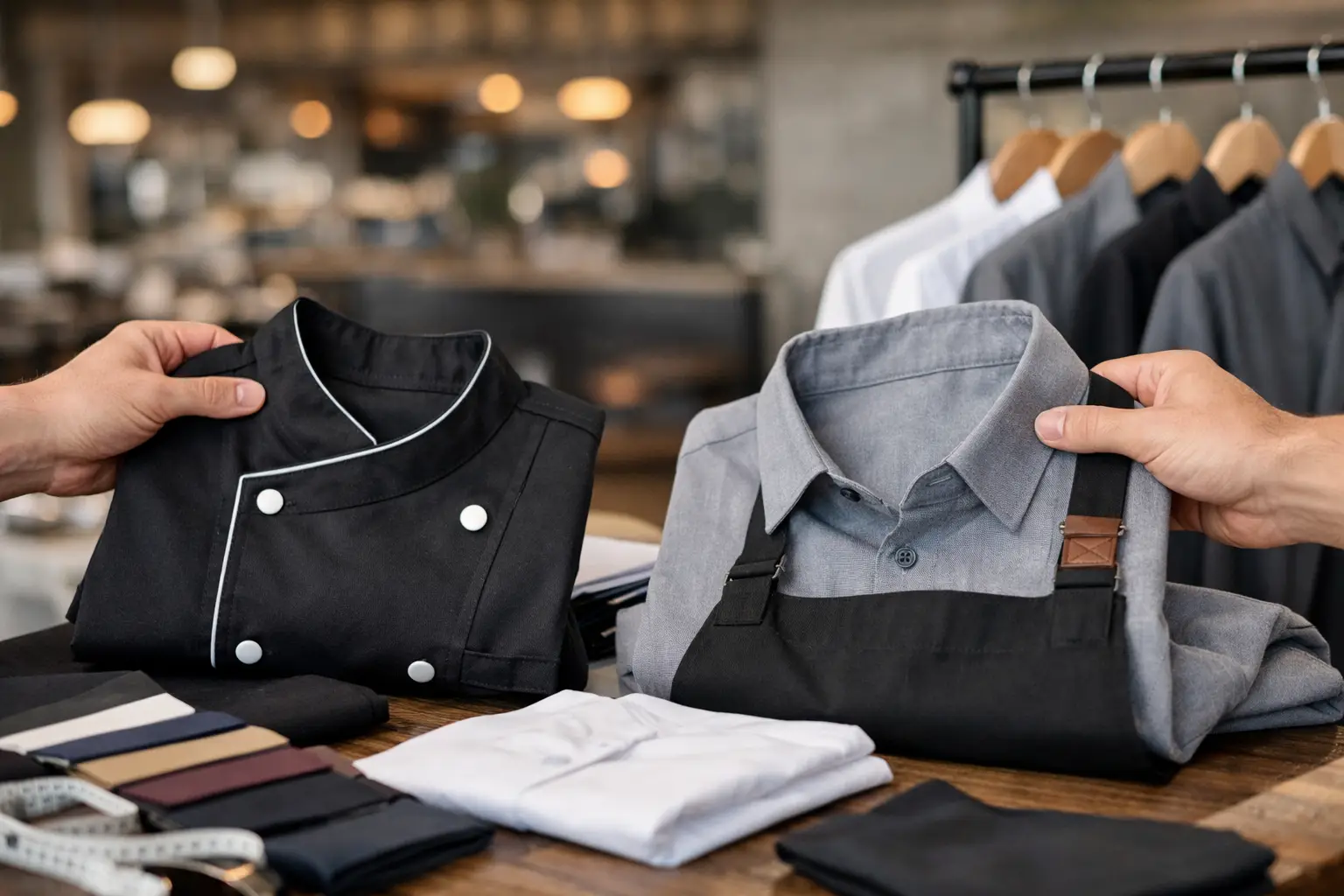
In Naples and throughout Southwest Florida, fabric choice is a practical business decision. Moisture-wicking polos and lightweight work shirts can help outdoor and active teams stay comfortable. Healthcare teams often need scrub options that offer stretch, easy care, and dependable color availability. Restaurant staff may need aprons and shirts that look clean through a demanding shift, while maintenance crews may need durable workwear with room for movement.
Comfort affects adoption. If employees dislike the fit, feel overheated, or cannot move easily, even a sharp-looking uniform program will break down. They may size up excessively, wear unapproved alternatives, or treat the garment as something to avoid. Offering a few approved styles within one visual system often gives teams the flexibility they need without losing consistency.
Choose colors with real-world use in mind
Brand colors matter, but they need to work on fabric. A light-colored shirt may show stains quickly in food service or field work. Dark colors can absorb more heat outside. Bright colors may improve visibility but compete with a detailed logo. The right choice depends on the setting, the work performed, and how often garments can be replaced.
It also helps to separate everyday uniforms from special-event apparel. Your team may need practical navy work shirts for regular use and brighter branded tees for a charity event, school function, or community festival. Both can support the same brand when the logo, type treatment, and colors are handled consistently.
Build a branding employee uniforms system
The best uniform programs are systems, not one-time purchases. They establish approved garments, logo versions, decoration locations, and reorder procedures before urgency takes over. That structure saves time when a new employee starts, a department expands, or an event appears on the calendar.
Start with a simple set of standards: which garments are approved, which logo file is used, what thread or ink colors are required, and where the logo belongs. For example, a left-chest embroidered logo may be the standard on polos, button-downs, jackets, and outerwear. A larger screen-printed logo may be reserved for T-shirts and event apparel. Names, titles, and department identifiers can follow a defined format so the finished pieces look intentional.
A logo does not need to appear in the same size on every garment. Embroidery has different limits than screen printing, and a small mark that looks excellent on a polo may lose detail on a cap or patch. A production partner can help determine when to simplify a design, adjust thread colors, or use a different decoration method while keeping the brand recognizable.
Embroidery, screen printing, patches, and more
Embroidery is a dependable choice for polos, woven shirts, jackets, hats, bags, and many professional uniform pieces. It offers texture and a finished appearance that holds up well over time. Fine details and very small lettering may require adjustments, so it is smart to review an embroidered proof before committing to a larger run.
Screen printing works well for larger artwork, bold graphics, staff shirts, team apparel, and promotional clothing. It can be especially cost-effective for quantities where the same design appears on many garments. The trade-off is that large ink areas can feel warmer or heavier, which may matter for employees working outdoors.
Patches are useful when a more structured, uniformed appearance is needed or when you want a design that can be applied to workwear, outerwear, and hats. Name embroidery and monograms can add a personal, service-oriented touch for hospitality, healthcare, and customer-facing teams. The right method depends on the artwork, fabric, quantity, budget, and expected use.
Plan for sizing, reorders, and turnover
A uniform program is only successful if people can get the right garments at the right time. Build a size range that reflects your actual workforce, not a limited sample run. Consider offering try-on options or fit samples when possible, particularly for scrubs, outerwear, and structured workwear where fit varies by brand and style.
Reorders deserve attention early. Some garments are seasonal, discontinued, or affected by supply changes. Choosing readily available styles and establishing approved alternatives can prevent a new hire from wearing something that is close, but not quite consistent. It also helps to keep decoration files and placement specifications organized for repeat orders.
For organizations with multiple departments, a controlled ordering process can reduce confusion. Department managers may approve quantities and names, while a central contact confirms logo use and billing. This does not need to be complicated. It simply prevents last-minute orders from creating mismatched colors, incorrect titles, or unapproved garments.
Budget planning should include more than the first order. Consider replacement cycles, staff turnover, seasonal layers, and special events. A less expensive shirt that fades quickly may cost more over time than a better garment with dependable color retention. On the other hand, premium apparel is not always necessary for every role. A balanced program may use durable essentials for daily work and elevated pieces for supervisors, sales teams, or formal events.
Work with a partner who understands the finished product
Good branded apparel requires more than adding a logo to a shirt. It takes attention to garment selection, artwork preparation, decoration method, thread or ink color, placement, and quality control. A hands-on local partner can help you see how those choices come together before your team wears the finished product.
Sew Shore has served local organizations since 1986, combining uniform retail experience with in-house embroidery, screen printing, patches, monograms, and graphic support. That matters when your needs include a small department order, an ongoing healthcare uniform program, or a coordinated rollout across staff apparel and promotional items.
Bring a clear picture of your team, but do not feel you need every answer before asking for help. Share the work environment, employee count, logo files, desired timeline, and any required colors or apparel standards. From there, the right program can be built around what your staff will actually wear and what your customers will actually see.
A well-chosen uniform becomes part of how your organization shows up each day. When it fits the work, represents the brand clearly, and remains easy to replenish, employees can focus on serving people while your business looks prepared for the job.