
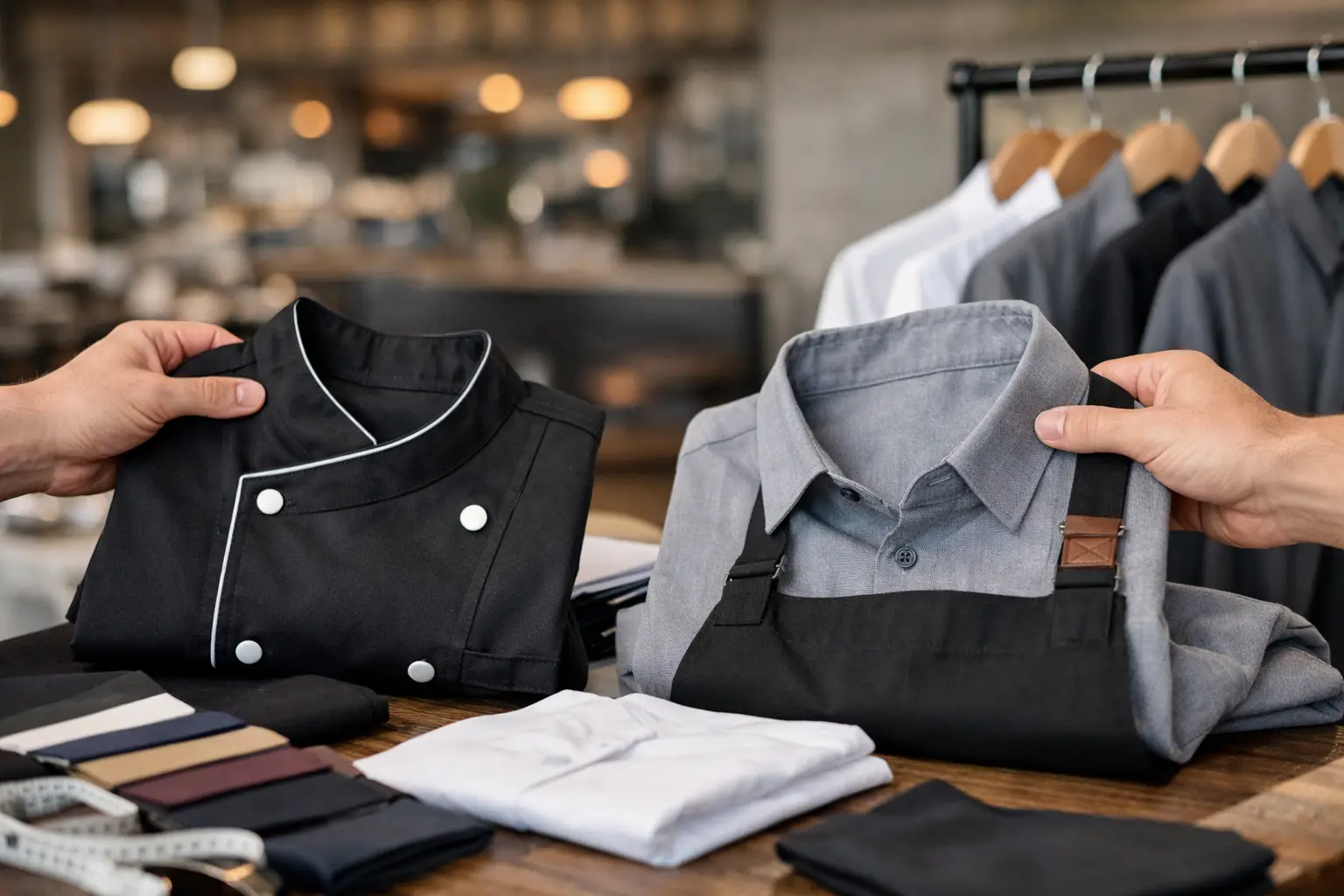
A chef coat does more than protect staff from heat, spills, and the pace of service. It signals who is leading the line, reinforces the restaurant’s identity, and helps guests recognize a professional kitchen team. Knowing how to personalize chef coats means balancing a sharp branded appearance with details that perform through long shifts, frequent laundering, and changing kitchen temperatures.
For a single chef, a monogram may be all that is needed. For a restaurant group, hotel, culinary school, or catering operation, personalization should be treated as part of a consistent uniform program. The right choices make reordering easier, keep the entire team on brand, and give every coat a purpose.
Start with the job each chef coat needs to do
Before choosing thread colors or logo placement, consider who will wear the coat and where. An executive chef greeting guests in an open kitchen may need a crisp white coat with a prominent embroidered name and a refined logo. A back-of-house prep team may need darker, easier-care coats with simpler identification. Banquet and resort culinary teams often benefit from a uniform look that connects to the larger hospitality brand.
Chef coats also vary in fabric weight, closure style, color, sleeve length, and ventilation. Cotton-rich styles offer a traditional feel and can be comfortable around heat, while polyester blends are often easier to care for and better at holding their color. Lightweight stretch panels and moisture-management fabrics can make a meaningful difference for staff working long shifts in Southwest Florida kitchens.
Personalization should work with the garment, not against it. A detailed logo can look excellent on a smooth, structured coat, but may be less readable on a heavily textured fabric or a coat with a narrow chest area. Choosing the coat and decoration method together prevents costly surprises after an order has been produced.
Choose the right way to personalize chef coats
Embroidery is the most common choice for chef coats because it is durable, professional, and well suited to names, titles, and restaurant logos. Thread has a dimensional finish that looks established rather than temporary, even after repeated washing. It is particularly effective on the left chest, collar, cuff, or upper sleeve.
For most kitchen programs, the best approach is a combination of identification and branding. A chef’s name might appear on the right chest, while the restaurant logo sits on the left chest or sleeve. This keeps the coat easy to read without making it feel crowded. Titles such as Executive Chef, Sous Chef, Pastry Chef, or Culinary Director can be added beneath the name when hierarchy matters to guests or staff.
Screen printing can work for larger, bolder artwork, especially on casual kitchen shirts, aprons, or event apparel. It is usually less common on traditional chef coats because embroidery better matches the garment’s tailored appearance. Heat-applied decoration can be useful for specialty applications, but it should be selected carefully. Kitchen heat, industrial laundering, and frequent wear demand decoration that is built for the environment.
A custom patch is another option when a brand uses a badge-style mark or needs a design with fine visual detail. Patches can create a distinctive hospitality or culinary-school look, but they add weight and a visible border. They are usually best when that structured, heritage-inspired appearance is intentional.
Plan logo placement before production
Placement has a major effect on how polished a coat looks. The left chest is the standard location for a company or restaurant logo because it is visible when staff are facing guests. The right chest is a natural home for a name, while a sleeve can carry a secondary logo, department mark, or location identifier.
Collar embroidery is a smart option for a chef’s name or a short title. It feels personal without competing with the main logo, and it is especially useful for executive chefs who want a more understated presentation. Cuff embroidery can also be distinctive, although it is less visible during active food preparation and may not suit every coat style.
Avoid filling every available area simply because it can be decorated. Too many marks can make a premium chef coat look busy. A logo, name, and title are often enough. If the operation needs more information, such as a resort name, culinary school affiliation, or event sponsor, choose the most customer-facing detail and place it where it remains readable.
Keep scale and color practical
Small logos with tiny lettering do not always translate cleanly to embroidery. A skilled decorator may recommend simplifying a mark, increasing the size slightly, or removing fine lines that would disappear in thread. This is not a compromise in quality. It is how an experienced production team protects the look of the finished garment.
Thread color should create contrast with the coat. White thread on a white coat may look subtle and elegant up close, but it will not provide strong visibility. Black, navy, charcoal, or a brand color often gives better definition on white fabric. On black or dark coats, light thread and metallic accents can stand out, though metallic thread may not be right for every logo or budget.
Use names and titles consistently across the team
Names make chef coats more personal, but consistency is what makes a uniform program feel organized. Decide early whether names will be embroidered as first name only, full name, or first name with last initial. Select one font style, capitalization format, thread color, and placement for the whole team.
Titles should follow the same rule. If one person is identified as “Sous Chef,” do not use “Sous” on another coat unless that abbreviated format is part of the standard. These details matter in hotels, clubs, healthcare dining programs, schools, and large restaurant groups where staff uniforms are seen by customers, administrators, and purchasing teams.
It is also worth planning for turnover and promotions. A title embroidered directly onto a coat looks polished, but it is not flexible when roles change. For larger teams, many organizations reserve titles for leadership coats and use names plus a shared logo for the rest of the kitchen staff. That approach controls replacement costs while still creating a unified look.
Build an order process that makes reorders simple
The strongest chef coat programs are easy to repeat. Keep a record of the approved garment style, color, logo size, thread colors, locations, fonts, and name format. A simple approval sheet or sample coat can become the standard for future hires, seasonal staff, and additional locations.
Gather accurate sizes before placing the order. Chef coats should allow comfortable movement through the shoulders and arms without looking oversized. If staff work near open flames, grills, or hot equipment, loose sleeves and poor fit can become a safety concern as well as a presentation issue. When possible, use fit samples so employees can try on the actual brand and style.
For multi-location businesses, use one approved decoration file and one set of placement standards. Localized details, such as a location name or department, can be added in a designated area without changing the core brand presentation. This gives every kitchen team a recognizable identity while maintaining consistency across the organization.
At Sew Shore, projects can be planned from garment selection through embroidery production, helping Naples-area hospitality businesses avoid the disconnect that can happen when uniforms and decoration are handled separately.
Consider care requirements before selecting decoration
A chef coat may be washed far more often than standard corporate apparel. Before ordering, ask how the garments will be cleaned. Home laundering, commercial laundry services, bleach use, high heat drying, and stain-treatment practices can all affect fabric and thread over time.
Embroidery generally holds up well, but quality starts with proper stabilization and digitizing. The embroidery backing supports the design and helps prevent puckering, especially on lighter-weight fabrics. A well-prepared logo also avoids excessive density, which can make an embroidered area stiff or cause it to pull on the fabric.
If staff members take coats home, clear care instructions help preserve the investment. If the business uses a laundry service, share the garment and decoration specifications with the provider. The goal is not just a coat that looks good on delivery day. It is a uniform that still represents the business well after a busy season of service.
Common mistakes to avoid when personalizing chef coats
The most frequent mistake is choosing artwork that is too detailed for the available embroidery area. Another is approving a design from a computer screen without considering the actual garment color, texture, and seam placement. A production proof and, when appropriate, a physical sample can prevent both issues.
Businesses also run into trouble when every employee submits a different spelling, title, or preferred name format. Review the roster carefully before production begins. Confirm accents, punctuation, capitalization, and title wording, especially for a larger culinary team.
Finally, do not let price alone determine the choice. A lower-cost coat may be appropriate for temporary staff or high-turnover roles, while chefs in guest-facing positions may justify a more substantial garment and higher-detail embroidery. The best value depends on the role, wash frequency, expected lifespan, and image the business wants to present.
A personalized chef coat should make the person wearing it feel prepared to lead, create, and serve. Start with a clear standard, choose decoration that fits the work, and leave room for your uniform program to grow as your kitchen team does.