A new restaurant opening, a school season starting, or a growing medical practice rarely has room for delays in staff apparel. Embroidery turnaround time is often one of the first questions customers ask, and it deserves a straight answer: the schedule depends on the artwork, garment availability, order quantity, and production capacity at the time you place the order.
For organizations in Southwest Florida, the best way to receive polished uniforms on schedule is to begin with a clear plan. Embroidery is a detailed production process, not a sticker applied at the last minute. When the logo, garments, and approval are ready early, production can move forward with far fewer surprises.
What Determines Embroidery Turnaround Time?
A typical embroidered apparel order moves through several stages before it reaches your team. First, the logo must be reviewed and prepared for embroidery. Next, garments must be selected and confirmed. After approval, the order is scheduled for production, embroidered, inspected, and prepared for pickup or delivery.
Each stage matters. A simple, previously used logo on in-stock polo shirts is generally more straightforward than a first-time order with multiple logo locations, individual names, specialty garments, and a tight event date. Both projects can produce excellent results, but they require different planning.
New Logo Setup Takes Time
Embroidery starts with digitizing, the process of converting artwork into a stitch file that tells the embroidery machine how to sew the design. This is not simply changing a file format. A skilled digitizer considers stitch direction, density, lettering size, color changes, fabric type, and how the design will hold its shape once it is sewn.
A logo that looks clean on a website may need adjustment to embroider well on a left chest, cap, scrub top, or jacket. Fine lines, tiny text, gradients, and very small details may need to be simplified. That review protects the finished appearance of your logo, but it can add time before production begins.
If your organization has ordered the same approved design before, reusing the existing embroidery file can help streamline the process. If the logo has changed, even slightly, it is worth confirming whether a new file or revision is needed.
Garment Availability Can Set the Pace
The embroidery shop cannot decorate garments that have not arrived. In-stock items can keep a project moving, while a specific color, size range, brand, or specialty item may need to be ordered from a supplier.
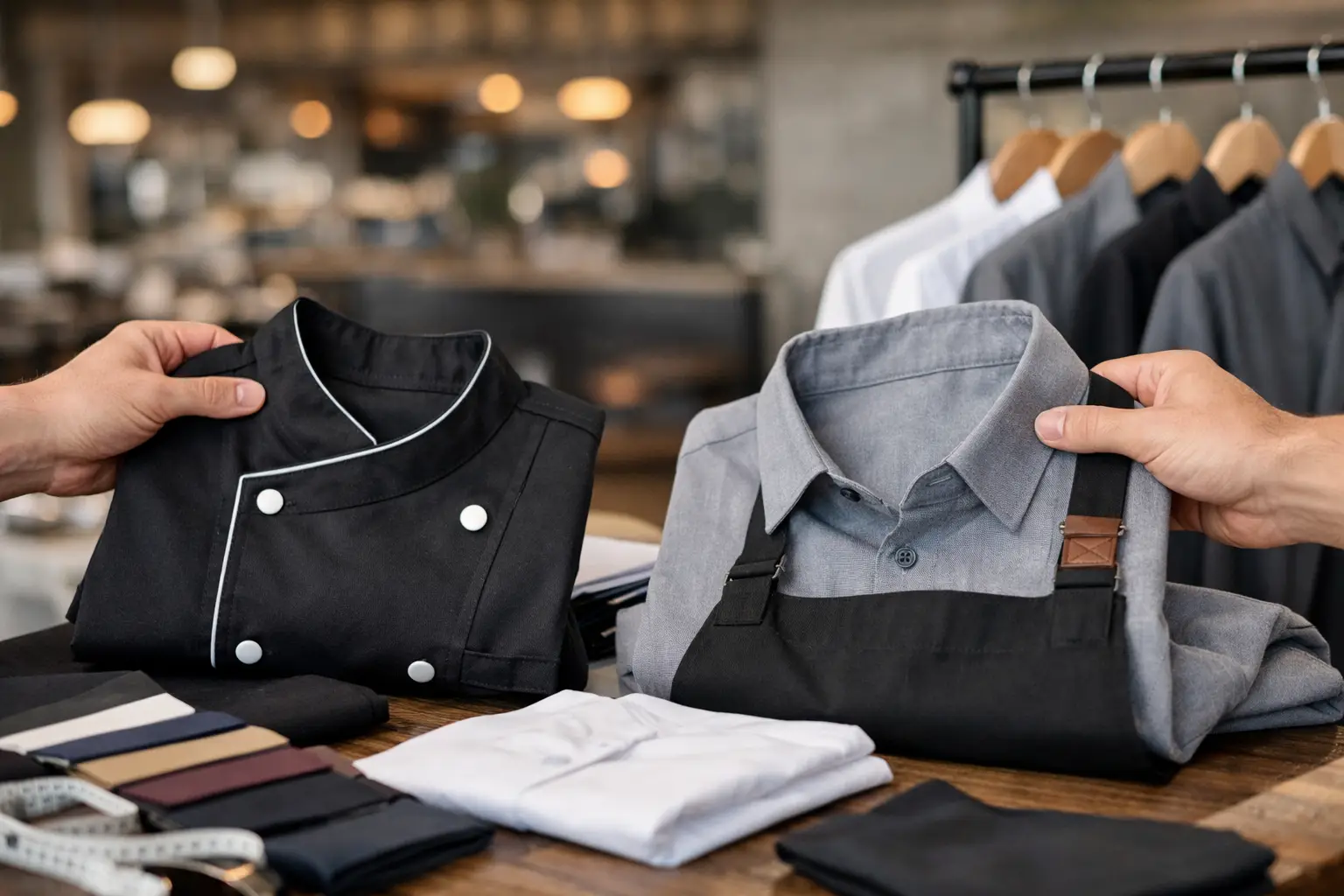
This is especially relevant for uniforms. Healthcare teams may need particular scrub styles, hospitality groups may need coordinated aprons and button-downs, and construction crews may need workwear with specific safety or weather features. Availability can shift by season and supplier inventory, so planning early gives you more options instead of forcing substitutions.
For recurring uniform programs, it helps to identify approved garments and colors before you need a rush order. That way, a new employee or replacement piece can be ordered with greater confidence.
Quantity, Locations, and Personalization Add Production Steps
A 12-piece polo order with one left-chest logo is not the same production job as 120 jackets with a chest logo, sleeve logo, and individual employee names. More pieces take more machine time. More locations require additional hooping, setup, handling, and quality checks.
Personalization also requires close attention. Names, job titles, departments, and numbered garments should be supplied in an accurate, organized format. A misspelled name is more than a minor typo once it has been embroidered into a garment. Confirming the spelling list before production helps avoid preventable rework.
Caps, bags, thick outerwear, structured work shirts, and other specialty items may also require different equipment or handling. These are worthwhile details to discuss during planning, particularly for a mixed order.
How to Plan for a Reliable Embroidery Turnaround Time
The strongest deadline is the one communicated at the beginning of the project. If you need uniforms for a grand opening, tournament, conference, inspection, or seasonal launch, share the in-hand date right away. The production team can then recommend realistic garment choices, decoration options, and an ordering timeline.
Do not treat the event date as the date to start shopping. Build in room for logo preparation, artwork approval, garment sourcing, production, and any final fitting or distribution within your organization. A practical buffer is especially valuable during busy periods, such as back-to-school season, winter visitor season, holidays, and major local events.
Send the Best Artwork You Have
Good artwork reduces avoidable back-and-forth. Vector files such as AI, EPS, PDF, or SVG are often preferred for logo preparation, though a high-resolution PNG may also be useful. If you do not have the original logo files, send the clearest version available along with any brand standards, approved colors, or previous decorated samples.
Be specific about what should be embroidered. A full logo, icon-only mark, business name, employee name, or department identifier may each call for a different treatment. If the design will appear on small items, such as a cap front or shirt sleeve, discuss whether the lettering will remain readable at that size.
Approve Proofs Promptly, but Carefully
A proof is an important checkpoint. It is your opportunity to verify the logo, thread colors, placement, spelling, garment color, and quantities before the order moves into production. Delayed approval can delay the entire schedule, but rushing through approval can create a more expensive problem later.
Assign one person within your organization to provide final approval whenever possible. This is particularly helpful for schools, property management groups, healthcare offices, and larger businesses where several stakeholders may have input. One clear decision-maker keeps communication organized and reduces conflicting instructions.
Choose the Right Decoration for the Job
Embroidery is an excellent choice for polos, button-downs, outerwear, uniforms, hats, bags, and many professional garments because it creates a durable, dimensional finish. It is not always the best choice for every design or deadline.
Large, detailed artwork on T-shirts or event apparel may be better suited to screen printing. A logo with very small text may need a simplified embroidered version. When timing is tight, choosing a garment and decoration method that match the project can make the difference between a workable plan and a stressful one.
A knowledgeable local production partner should be willing to explain those trade-offs. The goal is not simply to put a logo on an item. It is to create apparel your team can wear confidently and consistently.
When a Rush Order May Be Possible
Rush service depends on the specific order and current production schedule. It is never something to assume, especially during high-volume periods. A rush may be more feasible when the design is already digitized, the garments are available, the order is straightforward, and the customer can approve details quickly.
A rush becomes more difficult when the project requires new logo development, hard-to-source garments, extensive personalization, multiple decoration locations, or a large quantity. In some cases, splitting an order may help. For example, a business may prioritize uniforms for customer-facing staff first, then complete additional pieces as soon as possible. That approach is not right for every project, but it can be a practical option when an immediate need cannot move.
Be candid about your deadline from the first conversation. A dependable shop will tell you what can reasonably be done, rather than making a promise that puts quality at risk.
Common Delays You Can Prevent
Most embroidery delays are not caused by the machine itself. They tend to begin earlier, with incomplete information or decisions that arrive too late. Missing artwork, unclear placement instructions, delayed proof approval, unavailable garments, and changing quantities after production is scheduled can all affect timing.
You can reduce those issues by providing a complete order request: garment style and color, size breakdown, decoration locations, logo files, thread color preferences if applicable, personalization details, and the date you need the order in hand. If you are unsure about any of these details, ask before the order is released for production.
It is also wise to confirm whether customer-supplied garments are acceptable before purchasing or dropping them off. Some fabrics, brands, and previously worn items may not be suitable for embroidery or may carry added risk. Addressing that question early protects both your apparel investment and the schedule.
A Better Process for Ongoing Uniform Programs
Organizations with regular hiring, seasonal staff, or multiple locations benefit from treating embroidered apparel as an ongoing program rather than a series of emergency orders. Keep approved logo files, garment styles, thread colors, placement notes, and size information organized in one place. Establishing a standard uniform package also makes ordering easier for managers and new employees.
At Sew Shore, that kind of preparation helps businesses, schools, medical offices, and hospitality teams maintain a consistent professional image without rebuilding every order from the beginning. It also gives your organization a clearer path when a replacement garment or additional staff uniform is needed quickly.
The best time to ask about timing is before the calendar becomes urgent. Bring your deadline, logo, and garment needs into the conversation early, and you give your team the room to produce apparel that looks right, wears well, and arrives ready for work.