A guest may only spend a few seconds looking for help at a resort pool, restaurant, front desk, or event lawn. In that moment, hospitality uniform solutions for resorts do more than dress the team. They make the right person easy to find, reinforce the property’s standard of service, and help every department look prepared for the work ahead.
For Southwest Florida resorts, uniforms also have to stand up to heat, humidity, sun exposure, laundering, and long shifts. A polished look matters, but comfort and durability determine whether the program works after the first week. The best results come from planning uniforms around the role, environment, and guest experience instead of selecting one shirt for everyone.
Start With the Guest Experience
A resort uniform program should make the property feel coordinated without making every employee look identical. Guests should be able to recognize who can assist them, while employees should have apparel suited to their responsibilities.
At the front desk and concierge station, refined layers, tailored polos, woven shirts, dresses, or blouses may support a more elevated arrival experience. In food and beverage, staff need garments that allow movement and accommodate frequent washing. Pool attendants, recreation teams, valets, maintenance crews, and landscaping staff need breathable, practical pieces that hold up outdoors.
Color is one of the simplest ways to create clarity. A shared base color can tie departments together, while accent colors, embroidery placement, name badges, or role-specific garments help guests distinguish between teams. A resort does not need a different logo for every department. It needs a consistent visual system that works across the property.
Build a Uniform System, Not a Single Outfit
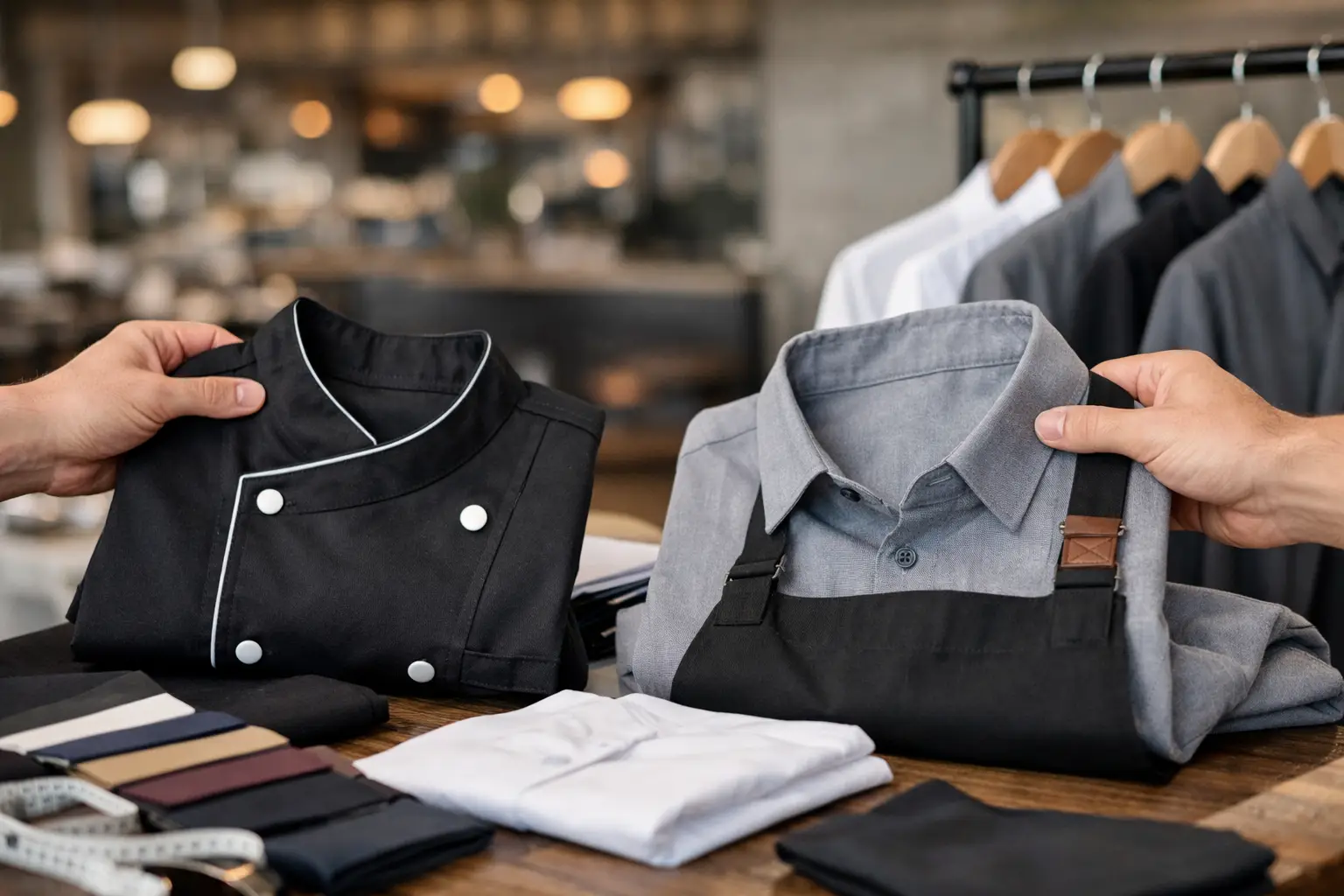
A practical resort program usually includes core garments and role-specific options. For example, a branded performance polo may work for guest services, sales, and activities staff, while kitchen teams need chef coats or aprons and engineering teams need durable work shirts. The logo, thread colors, and overall palette can remain consistent even when the garments differ.
This approach also gives managers better control over seasonal staffing. When new team members arrive, a clear approved assortment makes it easier to order the right sizes and roles without starting the selection process over again.
Choose Fabrics for Florida Conditions
Resort apparel in Southwest Florida has different demands than office apparel. Lightweight fabric is helpful, but the lightest option is not always the best choice. Fabric that is too thin may show sweat, wear quickly, or fail to present the level of quality expected in guest-facing positions.
Performance blends are often a strong fit for outdoor and active roles because they manage moisture and dry quickly. Cotton-rich styles can offer a more familiar, softer feel for indoor teams, though they may require more attention in humid working conditions. Stretch fabrics can be valuable for housekeeping, banquet setup, recreation, and other physically active jobs.
The decision depends on the role. A server moving between indoor dining and an outdoor terrace has different needs than a spa coordinator or front-office supervisor. Before placing a full order, it is wise to review samples, confirm sizing, and have key employees wear-test garments during a normal shift.
Durability should be part of the conversation from the beginning. Consider how frequently each item will be laundered, whether staff use commercial laundry, and how the garment will look after repeated washes. A lower-priced shirt that fades or loses its shape quickly can cost more over time when replacements are needed sooner.
Make Decoration Match the Garment and the Brand
The right decoration method affects both appearance and garment life. Embroidery provides a classic, dimensional finish that works especially well for polos, outerwear, dress shirts, hats, and many front-of-house uniforms. It projects permanence and can give a resort logo a polished, established look.
Screen printing can be a practical choice for large staff events, recreation shirts, promotional apparel, and designs with prominent artwork. It is especially useful when a large number of garments need the same graphic. For some uniforms, printed decoration may feel lighter and more flexible than a stitched logo.
Patches and name personalization can add function without complicating the overall design. A discreet embroidered name, a department patch, or a service-recognition element can help staff feel identified while keeping the resort brand in control.
Artwork should be reviewed for the garment scale. A logo that looks excellent on a brochure may be too detailed for a small left-chest embroidery. Simplifying fine lines, selecting the right thread colors, and approving a proof before production protects the final result. These details are where an experienced local decoration partner can prevent expensive rework.
Plan for Every Department, Including the Ones Guests Rarely See
Resorts often focus first on front-desk uniforms because they are highly visible. That is understandable, but a complete program should account for every team that supports the guest stay. Housekeeping, laundry, culinary, maintenance, security, dock staff, event setup crews, and back-office teams all represent the property when they cross guest areas.
Their needs should not be treated as an afterthought. Housekeeping employees benefit from garments that move well and offer practical coverage. Maintenance and engineering teams may need heavier-duty workwear, high-visibility options, or garments that accommodate tools. Culinary staff require apparel designed for heat, stains, and safety. Security uniforms should be professional and identifiable without creating unnecessary confusion with local law enforcement.
A uniform provider should be able to coordinate these needs under one program while recognizing that not every department needs the same garment, price point, or decoration method. Consistency is about the system, not uniformity for its own sake.
Create an Ordering Process That Stays Organized
A uniform rollout can go smoothly, then become difficult six months later when new hires need replacements and managers cannot remember what was approved. The answer is to document the program before the first large order is placed.
Keep an approved list of garments by department, color, decoration location, logo version, and sizing range. Establish who can authorize changes and determine whether employees receive an initial allotment, a seasonal issue, or replacement items as needed. This is particularly useful for resorts with peak-season hiring or multiple outlets on one property.
It also helps to consider inventory strategy. Keeping every size and style in stock may not be practical, especially for specialized items. However, having a plan for commonly needed pieces – such as core polos, hats, aprons, and front-desk layers – can reduce pressure when staffing changes quickly.
At Sew Shore, resort teams can work with a local partner that understands both uniform selection and in-house decoration. That means apparel, embroidery, screen printing, patches, and branded additions can be coordinated with a clearer view of the finished program rather than handled as separate purchases.
Balance Appearance With Employee Buy-In
A uniform policy works better when the people wearing it can do their jobs comfortably. Managers should set the visual standard, but employee feedback can reveal problems that are not obvious during a catalog review. A collar may feel too restrictive in heat, a light color may be impractical for a poolside role, or a particular fit may not serve the full team well.
Offering approved fit options can improve adoption without weakening the brand. For some roles, this may mean allowing both men’s and women’s cuts, short-sleeve and long-sleeve options, or a choice between two approved layers. The goal is a consistent appearance that respects real working conditions.
Questions to Ask Before Approving Resort Uniforms
Before finalizing a program, ask whether each garment is appropriate for the employee’s work environment, whether the logo will remain readable and attractive after repeated laundering, and whether the selected items can be reordered reliably. Also consider the season. A heavy outer layer may be useful for early-morning valet staff or cool indoor spaces, while it may have little value for teams working in the midday sun.
A thoughtful uniform program sends a quiet but clear message: this resort pays attention to the details that shape service. When staff can move comfortably, guests can find help quickly, and every department carries the same visual standard, the uniform becomes part of the experience guests remember.