A polo may be the first thing a customer notices when your technician arrives, a patient checks in, or a host greets a dining guest. That makes the choice between embroidered uniforms vs printed uniforms more than a decoration decision. It affects how your logo reads, how the garment wears over time, what your order costs, and whether your staff feels comfortable wearing it through a full shift.
For organizations across Southwest Florida, there is rarely one right answer for every garment. A medical practice may need crisp embroidery on front-office polos and printed graphics for a charity walk. A restaurant may choose embroidered button-downs for managers while using printed T-shirts for kitchen staff. The best program matches the decoration method to the job, the fabric, the artwork, and the number of pieces you need.
Embroidered Uniforms vs Printed Uniforms: The Main Difference
Embroidery creates a logo with thread stitched directly into the garment. It has dimension, texture, and a traditional professional appearance. You will often see it on polos, woven shirts, jackets, hats, scrubs, work shirts, and outerwear. A properly digitized logo can hold up very well to repeated laundering, making embroidery a dependable choice for uniforms that see frequent use.
Printing applies ink or a transfer to the surface of the garment. Screen printing is a popular option for bold artwork, larger graphics, and higher-quantity orders. Other print methods can be useful for full-color designs, smaller runs, or artwork with fine detail. Printing is commonly used on T-shirts, performance apparel, event shirts, team gear, safety shirts, and promotional apparel.
The visual difference is immediate. Embroidery looks raised and tailored. Printing lies flatter and can reproduce more artwork detail, color variation, and larger designs. Neither is automatically better. The right choice depends on what your staff does in the uniform and how you want your organization to be perceived.
When Embroidery Makes the Strongest Impression
Embroidery is often the preferred option when a polished, established appearance matters. Corporate offices, banks, healthcare practices, property management firms, country clubs, hospitality teams, and government departments frequently choose embroidered polos or woven shirts because the result feels permanent and refined.
It is especially effective for simple logos with clear shapes and limited small detail. A company name, monogram, badge-style mark, or clean icon can translate beautifully into thread. Left-chest placement is a classic choice because it is visible without overwhelming the garment. Names and job titles can also be embroidered for teams that need clear identification, such as medical staff, service technicians, and public-facing employees.
Durability is another reason organizations choose embroidery. Thread does not crack or peel the way a poorly matched print application might. However, embroidery is not indestructible. Heavy abrasion, harsh laundering practices, and very lightweight fabrics can affect the finished look over time. The garment itself still matters. A quality polo, work shirt, or jacket gives the stitching a better foundation and helps the uniform stay professional longer.
Embroidery does have limits with highly detailed artwork. Tiny lettering, gradients, photographic images, and intricate color changes may need to be simplified before they can be stitched clearly. When the artwork is too complex, printing may preserve the original design more accurately.
Best embroidery uses
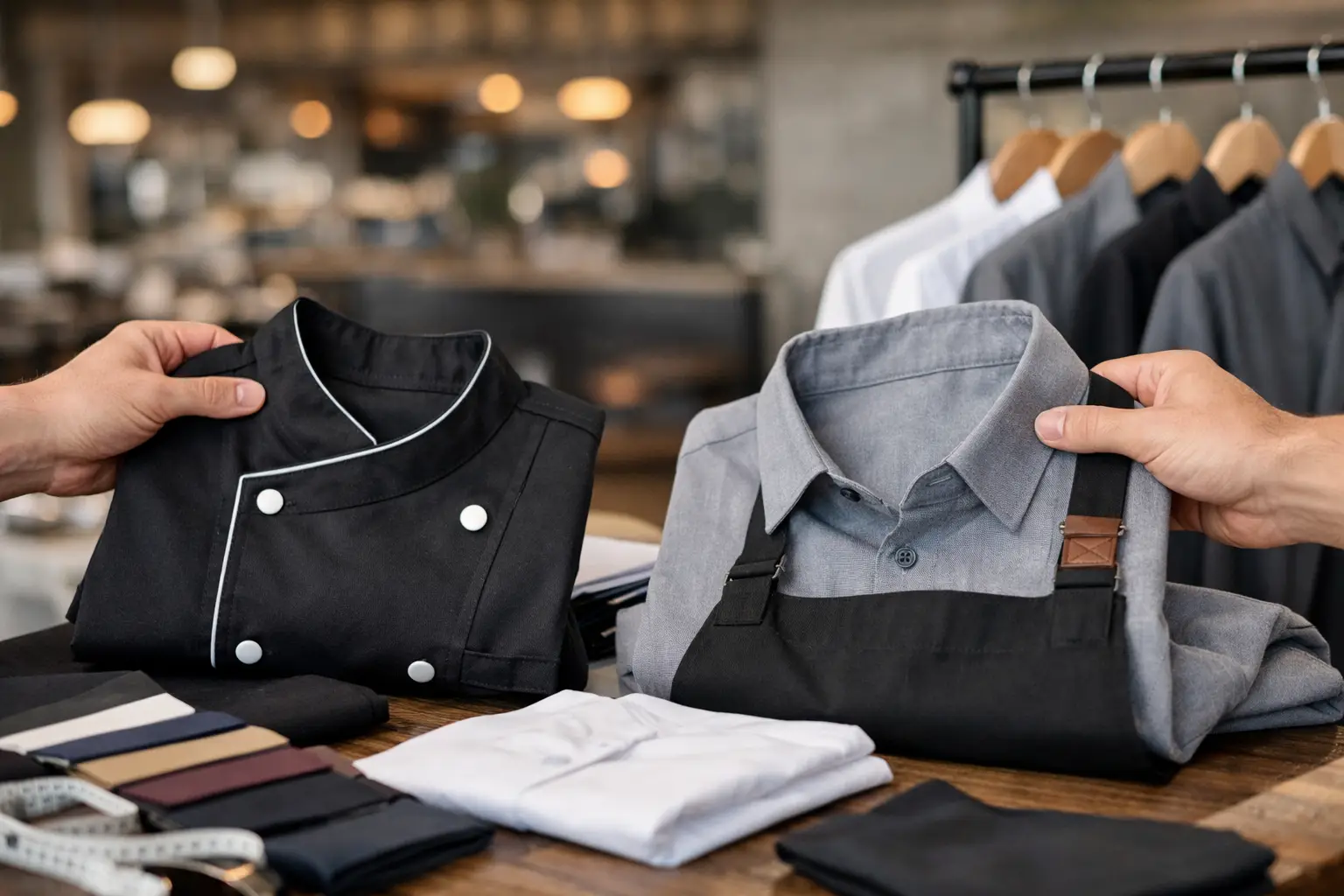
Embroidery is usually a strong fit for employee polos, dress shirts, quarter-zips, fleece, jackets, scrubs, hats, aprons, and durable workwear. It also works well when your order will be reordered over time. Once a logo has been prepared for embroidery, maintaining a consistent look across future uniform purchases is straightforward.
When Printing Is the Better Business Choice
Printed uniforms give organizations more freedom with artwork. If your design includes multiple colors, a large back graphic, fine lines, a gradient, or an illustrated image, printing can deliver detail that thread cannot reproduce at a small size. It is also the natural choice for large designs across the back of a T-shirt, safety shirt, or athletic jersey.
Screen printing can be a cost-effective option for larger orders with the same design. Schools preparing for a spirit event, contractors ordering branded crew shirts, nonprofits organizing a fundraiser, and sports teams outfitting a season can often benefit from printing because the per-piece cost becomes more favorable as quantities increase.
Printed apparel can also feel lighter than embroidery, particularly on thin performance fabrics. A densely embroidered logo may add weight or pull on a lightweight shirt, while a properly selected print can keep the garment flexible. For employees working outdoors in Naples heat, moisture-wicking shirts with a comfortable printed logo may be the more practical uniform.
That said, the print method must match the garment and intended use. A good decoration partner considers fabric content, stretch, color, wash requirements, and logo placement before production. Printing on a cotton event T-shirt is different from decorating a polyester performance polo or a high-visibility work shirt. The right process helps prevent issues such as dye migration, cracking, or an uncomfortable print area.
Best printing uses
Printing is often ideal for branded T-shirts, event apparel, team shirts, construction and landscaping crews, restaurant back-of-house apparel, promotional giveaways, school spirit wear, and large-logo garments. It is also a smart choice when a design needs to be seen from a distance, such as a company logo across the back of a field-service shirt.
Cost Depends on More Than the Garment Price
It is tempting to compare only the price of a polo or T-shirt, but decoration costs are driven by several practical factors. With embroidery, the stitch count in the logo, the number of locations, and the number of garments can affect pricing. A small left-chest logo generally requires less stitching than a large, detailed jacket back.
With printing, the number of ink colors, print locations, order quantity, and chosen process affect the final cost. A one-color front print for a large crew can be very efficient. A full-color design on a small quantity of shirts may require a different method and a different price structure.
For ongoing uniform programs, consistency has value beyond the initial order. If employees are added throughout the year, a standard embroidered polo program can make it easy to order a few additional pieces as needed. If your apparel changes with seasons, events, or marketing campaigns, printed shirts may give you more flexibility to refresh designs.
The lowest upfront price is not always the best value. Consider how long the garment needs to last, how often it will be washed, whether the logo needs to communicate a premium service level, and whether you will need matching items later. A uniform is part of your operating image, not just another supply purchase.
Choose Based on the Wearer and the Workday
A strong uniform program starts with the employee’s real working conditions. Front-desk staff may need a comfortable polo or blouse that presents well to customers. Healthcare teams may prioritize breathable scrubs, easy-care fabrics, and embroidered names. Restaurant teams may need aprons and shirts that can handle frequent laundering. Outdoor crews need garments that work in heat, sun, and active conditions while keeping the company name visible.
Consider placement as carefully as decoration type. A left-chest logo feels formal and restrained. A full back print improves visibility for delivery, construction, landscaping, and service teams. A sleeve logo can add brand presence without changing the front of a garment. Hats, bags, and outerwear can extend the program without requiring every employee to wear the same item year-round.
It is also reasonable to use both methods. Many organizations do. An embroidered polo can be the standard for supervisors, sales staff, and customer-facing team members. Printed tees can serve field crews, seasonal staff, events, community outreach, or casual Fridays. This approach keeps the brand consistent while giving each group apparel suited to its role.
Start With Your Logo, Then Build the Uniform Program
Before ordering, provide the clearest version of your logo available and explain where the apparel will be worn. A decoration specialist can review whether the artwork is better suited to thread, ink, or a combination of both. This early review is particularly valuable when logos include very small text, shading, thin lines, or multiple colors.
At United Uniforms / Sew Shore, the goal is to help organizations make that decision with the finished product in mind, not just a catalog image. Selecting the garment, decoration method, placement, and sizing plan together helps avoid costly surprises and creates a more consistent result across your team.
Bring your logo, a sample garment if you have one, and a clear picture of who will wear the uniform. A thoughtful conversation before production can turn everyday work apparel into a team standard your employees are proud to put on.