A host greeting guests at the door, a server carrying hot plates, and a line cook working through a dinner rush do not need the same uniform. The best uniforms for restaurant staff support the work each person actually performs while presenting one clear, professional brand to every customer who walks in.
For restaurant owners and managers, uniforms are not simply a dress code item. They affect comfort, safety, team morale, speed of service, and how polished the operation feels. A well-planned program also makes onboarding easier: new employees know what to wear, managers spend less time enforcing appearance standards, and the team looks consistent across every shift.
Start With the Restaurant’s Service Style
The right uniform begins with the experience you want guests to have. A waterfront casual restaurant, an upscale steakhouse, a neighborhood breakfast café, and a high-volume catering operation may all serve food, but their apparel needs are very different.
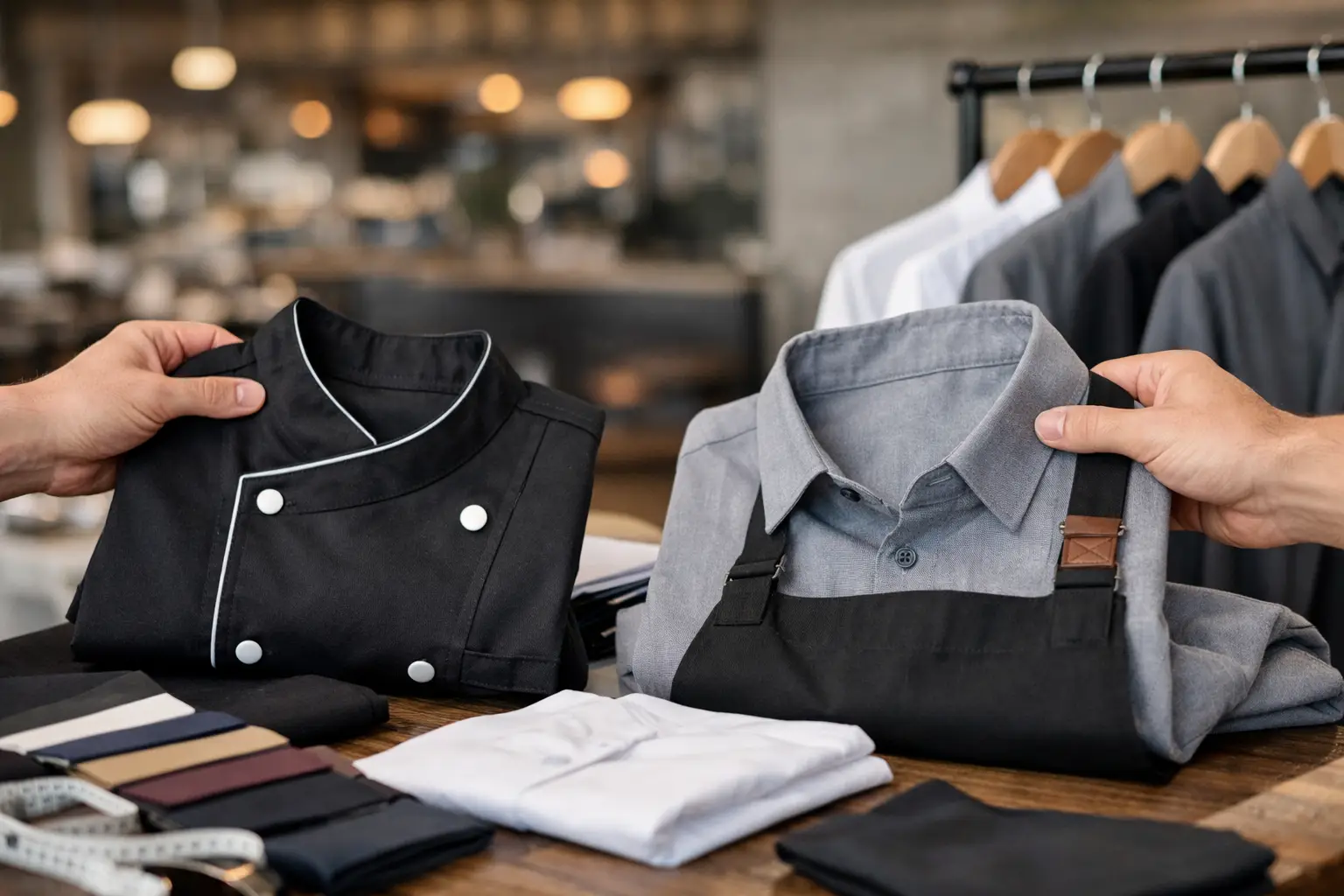
Fine-dining teams often benefit from structured button-down shirts, tailored aprons, vests, or polished black separates. The goal is refinement without looking stiff. In a casual setting, branded polos, soft tees, denim aprons, or camp shirts can feel more appropriate and approachable. Fast-casual concepts usually need durable, easy-care pieces that can handle frequent laundering and busy movement.
Color plays a major role. Dark colors can hide minor spills and maintain a clean appearance through long shifts, while lighter colors may better fit a bright, coastal, or café-style brand. Black remains a dependable choice for back-of-house and formal front-of-house roles, but it is not the only professional option. Navy, charcoal, deep green, burgundy, and coordinated neutral tones can distinguish a restaurant without making the staff look overly uniformed.
Before choosing garments, define a few practical standards: the level of formality, approved colors, footwear expectations, logo placement, and whether roles should be visually distinct. Those decisions create a consistent program rather than a collection of unrelated shirts and aprons.
Match Uniforms to Each Restaurant Role
A uniform program works best when it has a common visual thread but gives each department what it needs. Matching every employee in the same garment may be economical, but it can be uncomfortable or impractical in a kitchen, bar, or outdoor patio service environment.
Front-of-house staff
Hosts, servers, food runners, and managers are often the face of the restaurant. Their apparel should look crisp from the first seating through the last check. Branded polos and button-down shirts are reliable options for many concepts because they are easy to identify, simple to replenish, and suitable for embroidery.
For a more elevated look, pair a logoed shirt with a waist apron, bib apron, or vest. Aprons add utility for pens, order pads, and handheld devices while helping protect the base garment. Choose adjustable neck straps or cross-back styles when staff will wear aprons for extended periods. A poorly fitted apron becomes a comfort issue quickly during a long shift.
Bar staff
Bartenders need a uniform that looks intentional while allowing constant reaching, bending, and quick movement. Stretch fabrics, breathable shirts, and durable aprons are usually a better fit than heavy, restrictive layers. Darker apparel is practical behind a bar, where splashes and stains are part of the job.
A bartender’s uniform can also signal personality. A polished branded tee under a canvas apron may suit a craft cocktail bar, while a collared shirt and sleek apron may better fit a hotel restaurant or formal lounge.
Kitchen and back-of-house staff
Cooks, chefs, dish staff, and prep teams need function first. Chef coats remain a strong choice for open kitchens, chef-driven concepts, and teams that need a traditional professional presentation. Look for breathable, washable fabrics and features such as vented panels, thermometer pockets, or practical sleeve designs.
For high-heat kitchens, lightweight performance shirts or moisture-managing chef apparel can be more comfortable than heavy cotton. The trade-off is that some technical fabrics may require more careful decoration choices or may have a different feel than traditional chef coats. Kitchen pants should prioritize mobility, durability, and easy laundering. Slip-resistant shoes should be part of the overall standard, even if they are sourced separately.
Outdoor and event teams
In Southwest Florida, patio staff, catering crews, valets, and event teams need to account for heat, sun, and humidity. Lightweight polos, moisture-wicking shirts, sun-protective options, hats, and visors can help employees stay more comfortable and presentable outdoors. White or very light garments may look fresh at the start of service but can be harder to maintain in an active outdoor role.
Fabric and Fit Matter More Than Most Owners Expect
Uniform complaints usually come down to two issues: employees are too hot, or the garment does not move with them. Restaurant work is physical. Staff bend, carry, reach, walk quickly, and move between cool dining rooms and hot kitchens. Apparel that feels fine during a fitting can become frustrating after four hours of service.
Cotton is familiar, breathable, and comfortable, but 100% cotton may wrinkle, shrink, or hold onto stains more readily than blends. Cotton-polyester blends offer dependable durability and easier care, making them a common choice for restaurant polos, button-downs, and work shirts. Performance fabrics can improve moisture management, particularly for outdoor staff or warm work areas, though they should be selected with care to ensure the garment still fits the restaurant’s desired look.
Fit should be inclusive and consistent. Offer a full size range and, when available, multiple fit options. A uniform only looks professional when employees can wear it comfortably and confidently. Avoid selecting a garment based only on a sample displayed on a hanger. Have a few team members try it on, sit, reach, lift, and move as they would during a shift.
Branding Should Be Visible, Not Overdone
A logoed uniform helps guests identify employees and reinforces the restaurant’s identity, but decoration should support the garment rather than overwhelm it. Left-chest embroidery is a classic choice for polos, woven shirts, jackets, and chef coats. It is durable, professional, and easy to recognize at conversational distance.
Screen printing can be an effective option for staff tees, event shirts, promotional apparel, or larger back designs. It often works well when the restaurant has a graphic-forward identity or needs a bolder visual statement. Name personalization, job titles, and embroidered patches can be useful for managers, chefs, or teams that need quick role recognition.
Consider where the logo will sit before ordering. Fine details may not reproduce clearly at a small embroidered size, while some fabrics are better suited to one decoration method than another. A production partner can help adjust artwork, thread colors, and placement so the finished garment looks clean and readable rather than crowded.
Build a Uniform Program That Can Be Reordered
The first order is only the beginning. Restaurants hire, promote, replace garments, open new shifts, and refresh seasonal staff. Choosing items that are likely to remain available makes future reorders far easier. This is especially valuable for businesses with multiple locations, recurring events, or high staff turnover.
Keep a simple uniform record with approved garment styles, colors, logo files, decoration locations, and size history. If managers can reference an established standard, they are less likely to place inconsistent orders later. It also helps to decide whether employees receive a set number of pieces, purchase replacements, or are issued uniforms through management.
Budget should include more than the garment price. Factor in decoration, setup requirements, replacement needs, laundering frequency, and the cost of choosing apparel that wears out too quickly. Less expensive shirts can be a smart choice for seasonal promotions, but daily staff uniforms often justify a more durable option. The best value is the program that keeps looking good after repeated use, not the lowest-cost piece on day one.
Work With a Partner Who Can Manage the Details
Uniform selection becomes easier when one local team can coordinate apparel, artwork, decoration, sizing, and repeat orders. Sew Shore works with restaurant and hospitality businesses that need practical branded apparel, from chef coats and aprons to embroidered polos, staff shirts, hats, and event wear. The right guidance upfront can prevent common problems such as inconsistent colors, unsuitable fabrics, or logos that do not translate well to the selected garment.
Ask to review samples before committing to a full order, particularly when trying a new fit, fabric, or decoration method. Confirm expected turnaround time, minimums where applicable, and the process for adding individual names or replacing items later. Clear communication at the start helps protect your brand during the busiest parts of the season.
A restaurant uniform should make employees feel prepared for service, not distracted by what they are wearing. Choose apparel that suits the role, stands up to the workload, and carries your brand with quiet confidence. When the team looks comfortable, capable, and consistent, guests notice before the first plate reaches the table.