A uniform program succeeds or fails long before the first shirt is embroidered. The right apparel gives employees a professional, comfortable way to represent your organization. The wrong approach can leave you with inconsistent colors, poor fit, unused inventory, and repeated last-minute orders. Knowing how to build an employee uniform program starts with treating uniforms as an operating tool, not simply a logo placement exercise.
Whether you are outfitting a medical office, restaurant, school, property management team, construction crew, or front-desk staff, your program should make the workday easier while presenting a consistent image to the public.
Start With the Job, Not the Garment
Before choosing polos, scrubs, button-downs, or work shirts, define what each team member actually does during a shift. A receptionist may need polished, easy-care corporate apparel. A technician may need durable workwear with room to move. Clinical staff need scrubs that meet workplace expectations and hold up to frequent laundering. Restaurant teams may need garments that balance a coordinated appearance with heat, spills, and active service.
Walk through a typical day for each role. Consider indoor and outdoor conditions, how often employees bend or lift, whether pockets are needed, and how often garments will be washed. In Southwest Florida, heat and humidity deserve special attention. Moisture-wicking fabrics may be worth the added cost for outdoor crews, hospitality staff, and any role with physical activity.
It also helps to separate roles into a few apparel groups instead of forcing one item on every employee. For example, an office team may wear embroidered polos or woven shirts, while field staff wear branded performance shirts and more durable pants. The shared logo, color palette, and decoration standards keep the overall brand consistent.
Set Clear Standards Before You Order
A uniform program needs rules that employees and managers can understand without guessing. Decide which pieces are required, which are optional, and which items employees may purchase as extras. Define approved garment colors, logo placement, name personalization, outerwear requirements, and any safety or compliance needs.
Keep the policy practical. A detailed policy is useful only if supervisors can enforce it and employees can follow it. Specify when uniforms are worn, how they should be maintained, and what happens when an employee needs a replacement. If employees wear their own pants, shoes, or outer layers, establish acceptable colors and styles so the finished look does not become uneven.
Brand consistency matters, but flexibility can improve adoption. Offering two approved shirt styles, for example, may help accommodate different fit preferences while preserving a unified appearance. The same is true for seasonal layers. A lightweight polo may be the daily standard, while an embroidered jacket or quarter-zip can be approved for air-conditioned offices, early shifts, and cooler weather.
Build a Logo and Decoration Standard
Your logo should be prepared for the way it will be applied. Embroidery gives polos, jackets, hats, and woven shirts a durable, professional finish. Screen printing is often a strong choice for larger artwork, team shirts, event apparel, and higher-volume orders. Patches can be useful for uniforms that need a distinct, structured look or for programs that require replacement garments over time.
Do not assume one decoration method is best for every item. Small embroidered lettering may not reproduce clearly at a tiny size, while a large multicolor design may be more economical as a screen print. Establish approved logo versions, thread or ink colors, placement, and maximum sizes at the beginning. That protects your brand when different departments reorder months later.
Create a Budget That Accounts for Reorders
The initial garment cost is only one part of the program. A workable budget accounts for decoration, setup or artwork preparation where applicable, size ranges, replacements, seasonal layers, and employee turnover. If the organization supplies uniforms, determine how many complete sets each employee receives. Two shirts may work for a low-contact office role, but employees in healthcare, food service, landscaping, or field operations often need more frequent changes.
The lowest-priced garment is not always the lowest-cost choice. A shirt that loses its shape, fades quickly, or becomes uncomfortable after repeated washing can create replacement costs and employee frustration. For customer-facing teams, it can also weaken the polished image the uniform was meant to create.
Plan for common reorder triggers: new hires, promotions, damaged garments, employee size changes, and seasonal additions. Keeping approved products on file makes these orders faster and prevents a gradual drift in color or style. For larger organizations, a simple department-by-department roster can help track what was issued and what each role is approved to wear.
Choose Products Employees Will Actually Wear
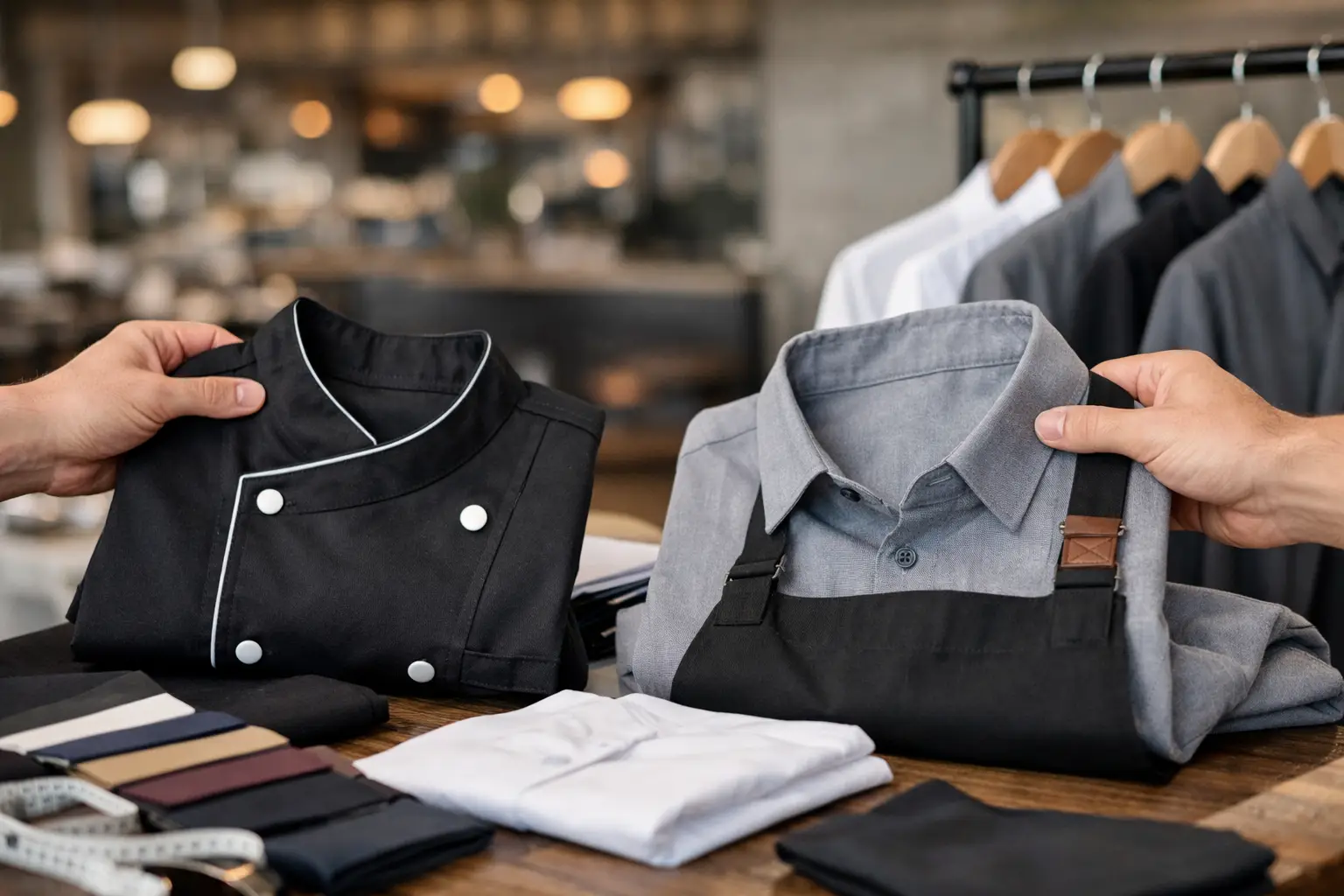
Fit is one of the most overlooked parts of a uniform decision. A garment can look excellent on a catalog page and still be a poor choice for the people doing the job. Request samples or arrange a fitting when possible, especially for larger teams, scrubs, outerwear, and workwear. Ask employees to move, sit, reach, and test the pockets before you commit to a full order.
Offer a realistic size range and review manufacturer sizing carefully. Different brands fit differently, even when the labeled size is the same. If your workforce includes varied body types or employees who need specific cuts, having approved alternatives can prevent uncomfortable or unprofessional results.
Fabric selection should follow the environment. Cotton can feel familiar and comfortable, but may not dry as quickly as performance blends. Polyester performance fabrics can help manage moisture and color retention, though some teams prefer a softer cotton-blend feel. For industrial or outdoor work, durability, visibility, and protection may take priority over a more polished office appearance. There is no universal best fabric – there is only the right fabric for the job.
Make Ordering Easy for Managers and Employees
A uniform policy loses value if ordering is confusing. Identify who can approve orders, who submits employee names and sizes, and where records are kept. Decide whether the organization places all orders centrally or whether employees can purchase approved extras. A central process gives tighter control; employee-paid extras can reduce administrative work and let team members add useful items like jackets, hats, or additional shirts.
For programs with frequent hiring, prepare a standard new-hire package by position. A new server might receive branded shirts, an apron, and a hat. A new medical employee may receive a defined number of scrubs and an embroidered jacket. A new office employee may receive polos or woven shirts with an optional layer. This approach shortens onboarding and makes expectations clear from day one.
Work with a decoration partner that can keep your approved artwork, garment choices, and placement notes organized. At Sew Shore, local organizations can coordinate apparel selection, embroidery, screen printing, patches, and other branded materials through one experienced team, which helps reduce handoffs and ordering confusion.
Roll Out the Program With a Reason, Not Just a Box of Shirts
Employees are more likely to support uniforms when they understand the purpose behind them. Explain how the program supports safety, customer recognition, team pride, and a more professional presentation. Give employees clear care instructions, expected wear dates, and a contact person for sizing or replacement questions.
A pilot order can be a smart move when you are testing a new garment, redesigning a logo application, or outfitting a large staff. Start with a representative group, collect feedback after real shifts, and adjust before placing the full order. This adds a small amount of time up front, but it can prevent a much more expensive correction later.
Once the program launches, review it after the first few months. Ask managers whether garments are holding up, whether employees have trouble with sizing, and whether the approved items still fit the work being done. Revisit the program when your brand changes, new departments are added, or working conditions shift.
Keep the Program Consistent as Your Team Grows
The best uniform programs are designed for the next hire, not only the current staff. Keep a written list of approved items and decoration details. Avoid switching products without checking color, fit, availability, and decoration compatibility. If an item is discontinued, select a replacement that stays as close as possible to the established look.
Consistency does not mean being rigid. Your program should be able to accommodate new roles, weather needs, and employee feedback without losing its visual identity. A thoughtful system gives managers control, gives employees confidence, and gives customers an immediate sense of who represents your organization.
A well-built uniform program is one of the few brand investments your customers see every day. Start with the work, listen to the people wearing the apparel, and create standards that are simple enough to sustain.